When we first moved to Boise nine years ago, I thought I was going to freeze to death.
I moved in mid-February and Rich in April. I expected to be cold during the winter. But I didn’t expect to be cold when Rich came in April. And I certainly didn’t expect to be cold until nearly the end of summer.
I had lived in cold areas before moving to Boise, but those areas were desert–virtually no humidity.
Boise humidity isn’t exceptionally high, but it’s much higher than the Nevada desert.
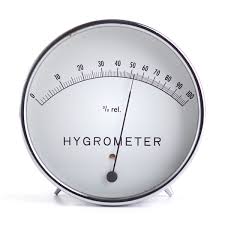
Just checked humidity as I wrote this post. Boise is 84%, and Reno is 47%.
Since returning to Boise last week, I feel the same way again: freezing to death!
We just finished spending four months in Phoenix, and the humidity there is a whopping 7%.
So NOW I know why I have been feeling like I’m freezing to death since we’ve returned to Boise.
Like everyone else I know, we’ve got a lot going on right now.
And like everyone else I know, what we have going in isn’t easily explained.
So it feels like each time I am asked a question, I give an answer that has to have an asterisk.
Case in point:
As we are trying to transition from permanent traveling nomads life to occasional traveling nomads life, we don’t have a physical address right now and haven’t had one for 11 months.*
The asterisk indicates that there’s a bit more to that statement.
While we don’t REALLY have a permanent address, we are using Melissa’s because there are many things in life that you can’t buy without a physical address.
(Health insurance requires a physical address because rares are based on where you live,
Buying and financing a major purchase like a house or car requires a physical address because part of your credit score is calculated on where you live and how long you’ve been there.)
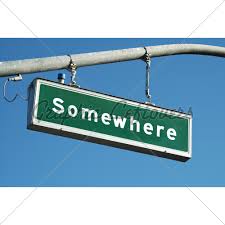
So asterisk #1 for our address is: We are pretending that we live at 123 Somewhere Street…
We’re working towards purchasing a home, so asterisk #2 is: If all goes well, we plan to be living at 123 Dream Home Way in a few weeks.
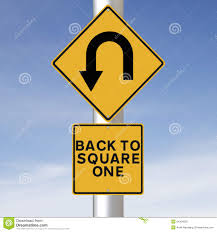
But if the deal falls through, asterisk #3 will be: We will be living back at Square One because we don’t have a backup plan.
Living the asterisked life means there are very few Yes or No or uncomplicated answers.
Everything requires extra explanation.
One * leads to another * which leads to another *.
We’ve been “house shopping” or, as our wise real estate agent corrected me, we’ve been “house looking” since we got into Boise on Wednesday afternoon.
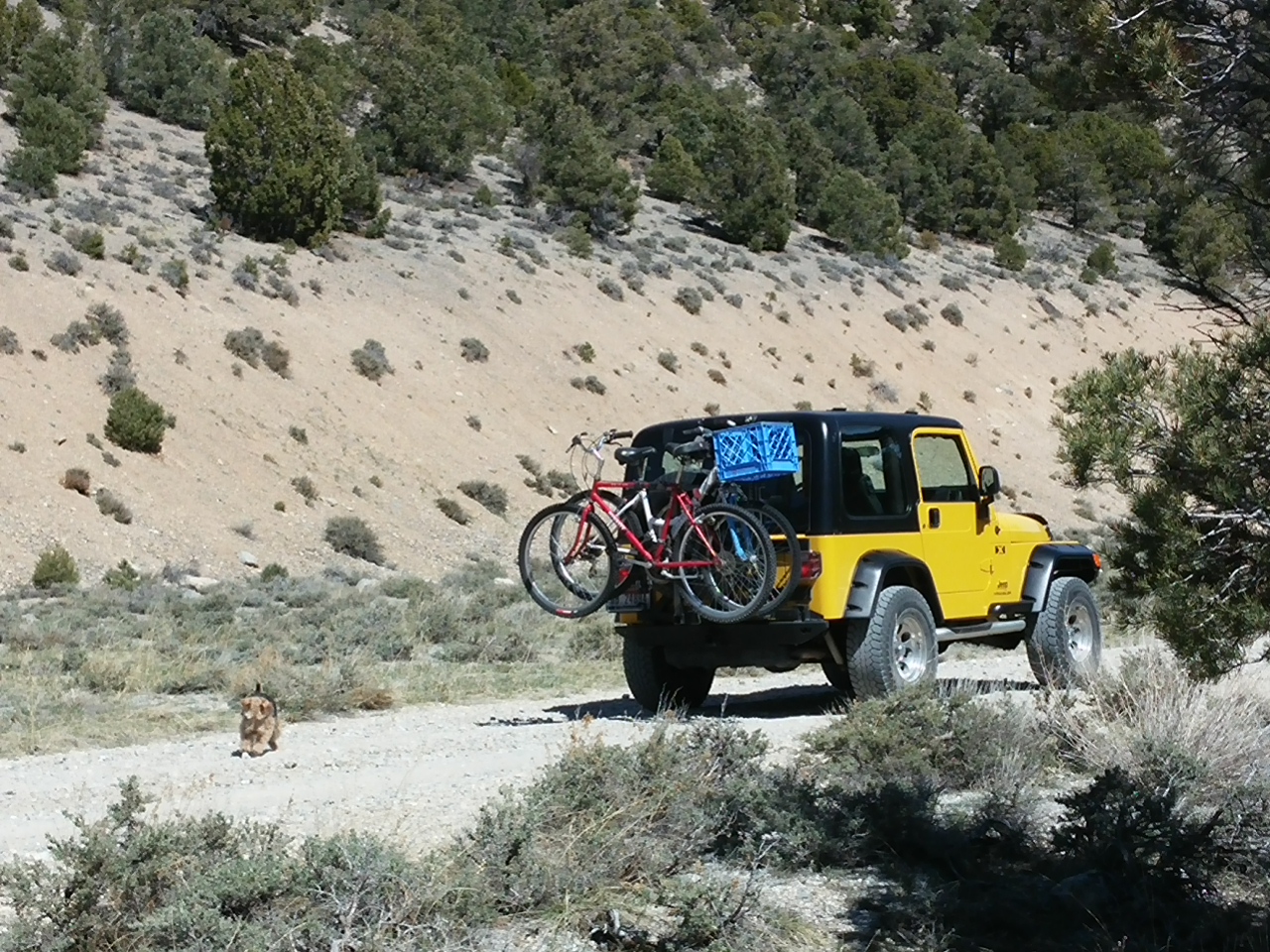
That’s two and a half days that poor Sophie has been stuck in the Jeep while we drive and discuss and look and discuss and whine because it’s hard to find the best fit to meet our needs.
Sophie’s been a trooper and hasn’t complained. She’s whined a bit along with us, but she’s been really quite agreeable as we muddle through the ‘house looking’.
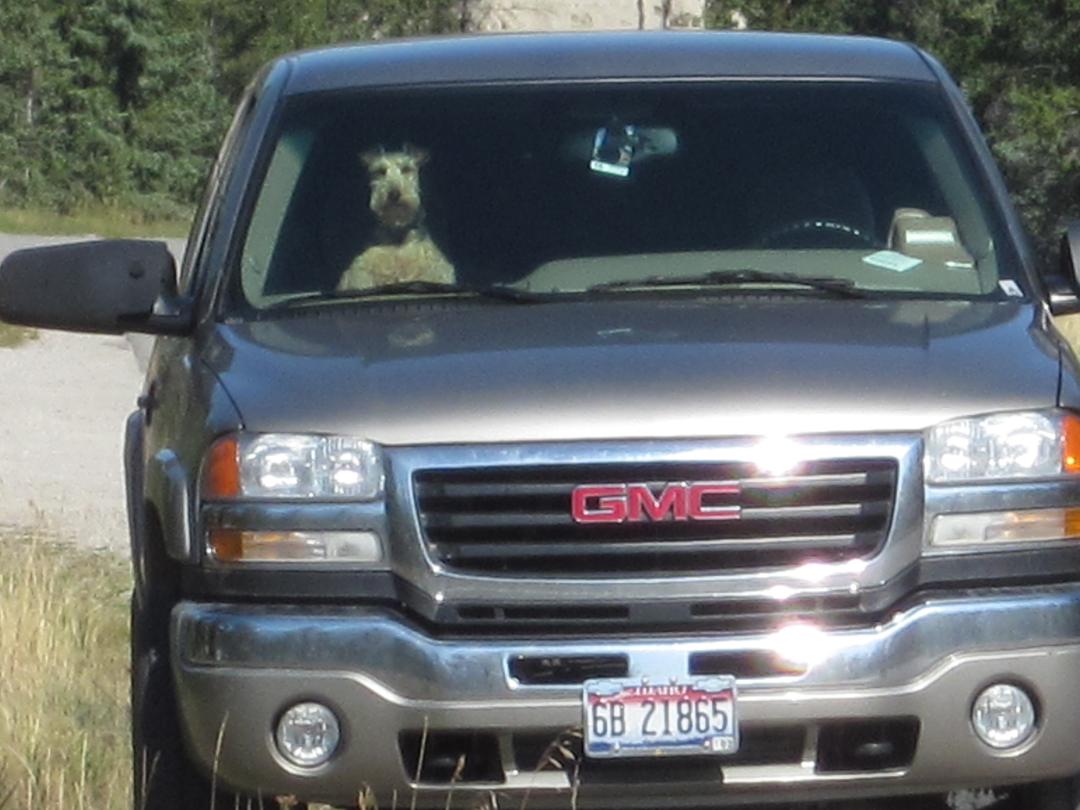
I didn’t take any pictures of her forlornly looking at us from inside the Jeep. She just looked too sad…
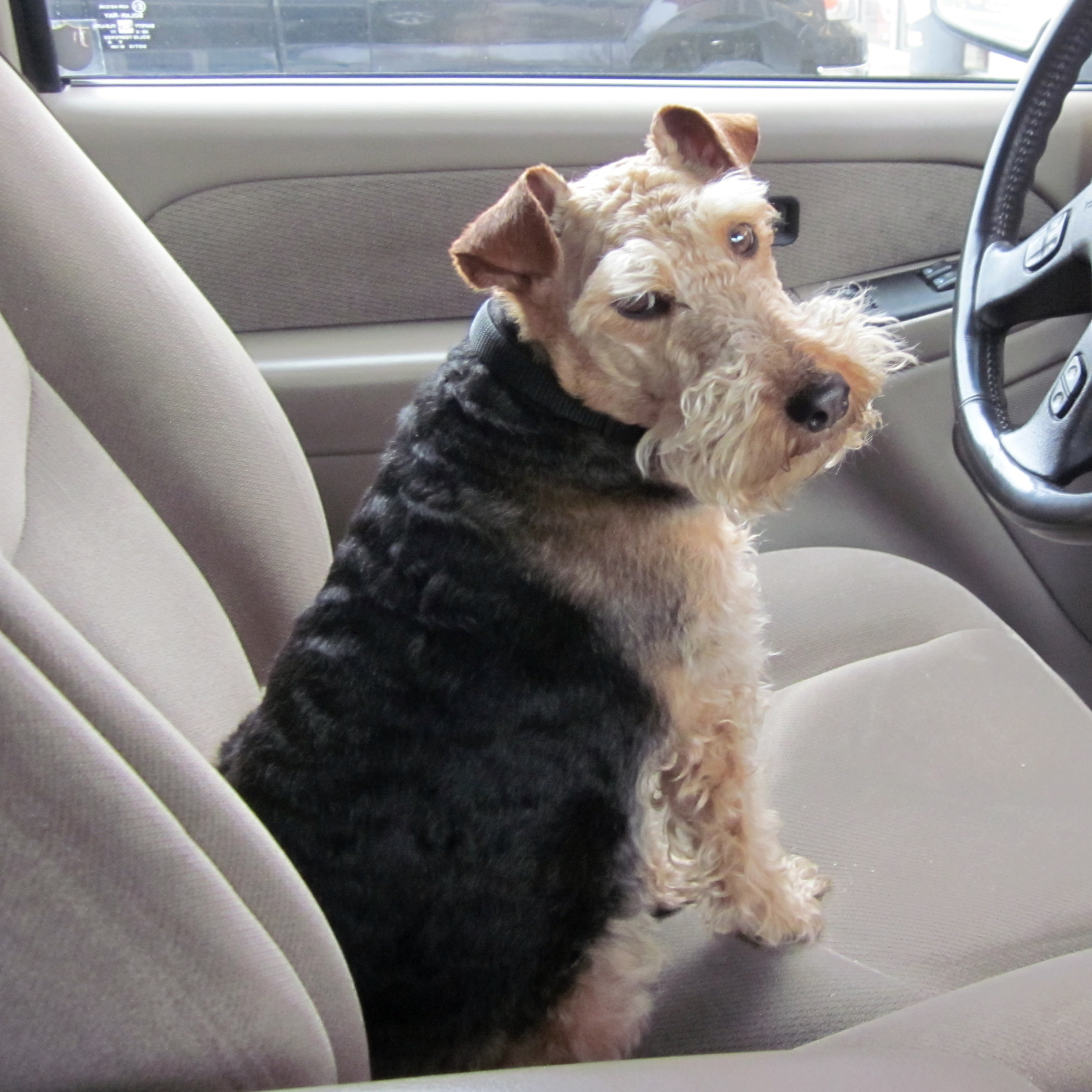
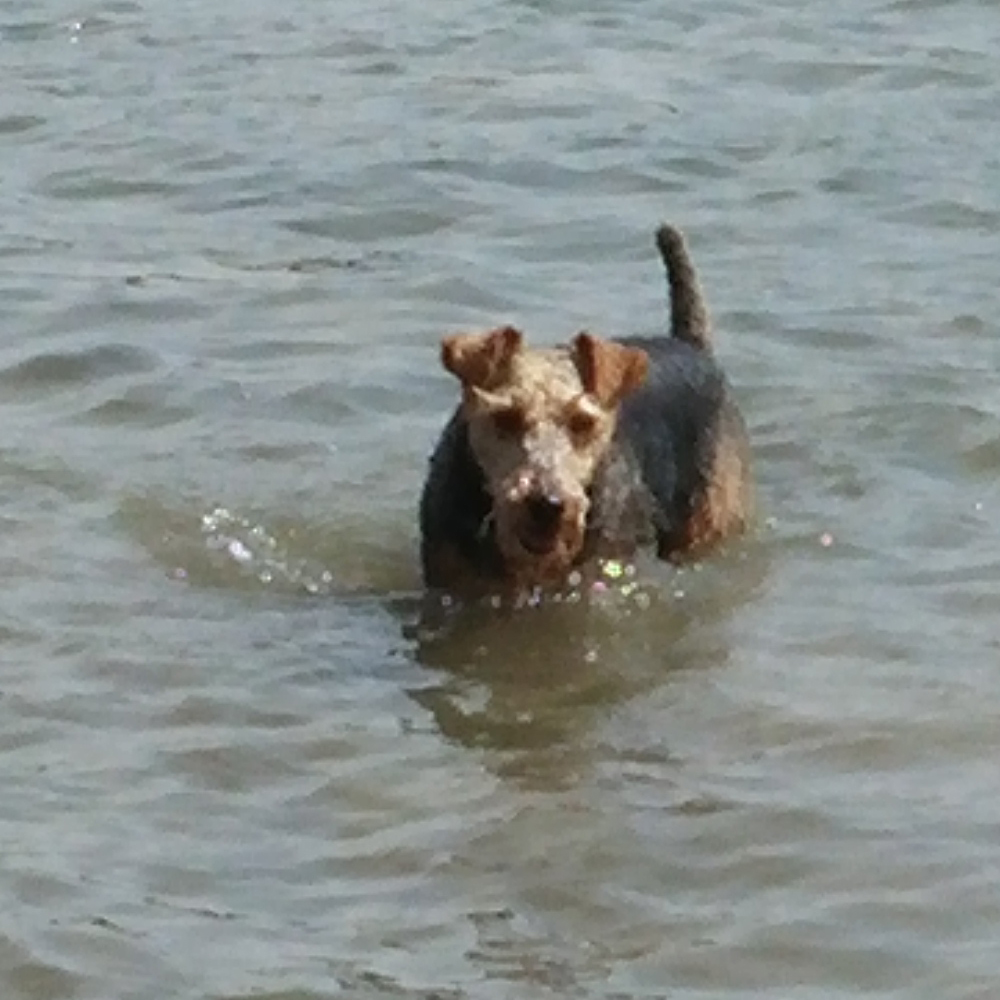
Instead, I’ll honor her today by showing some pictures of Sophie over the last few years!
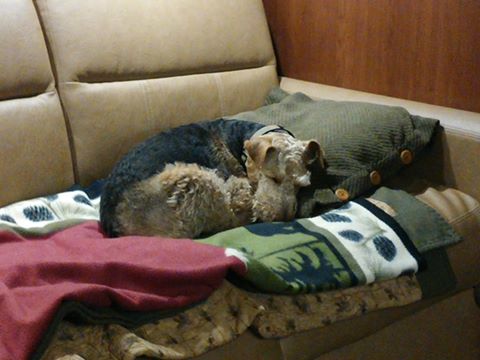
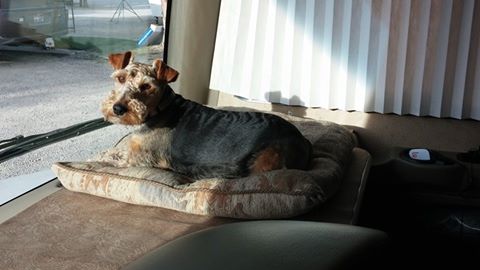
Taking a Nap
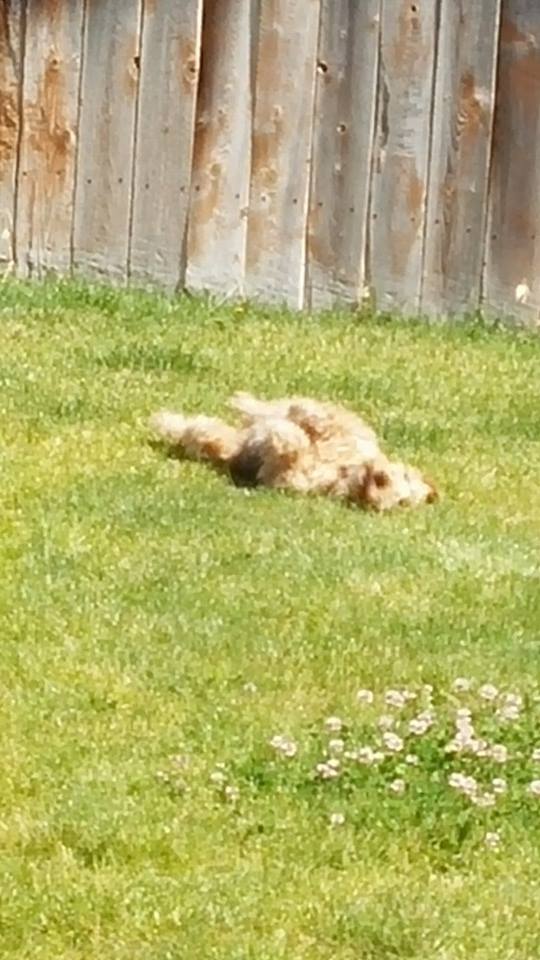
Taking a Lawn Bath
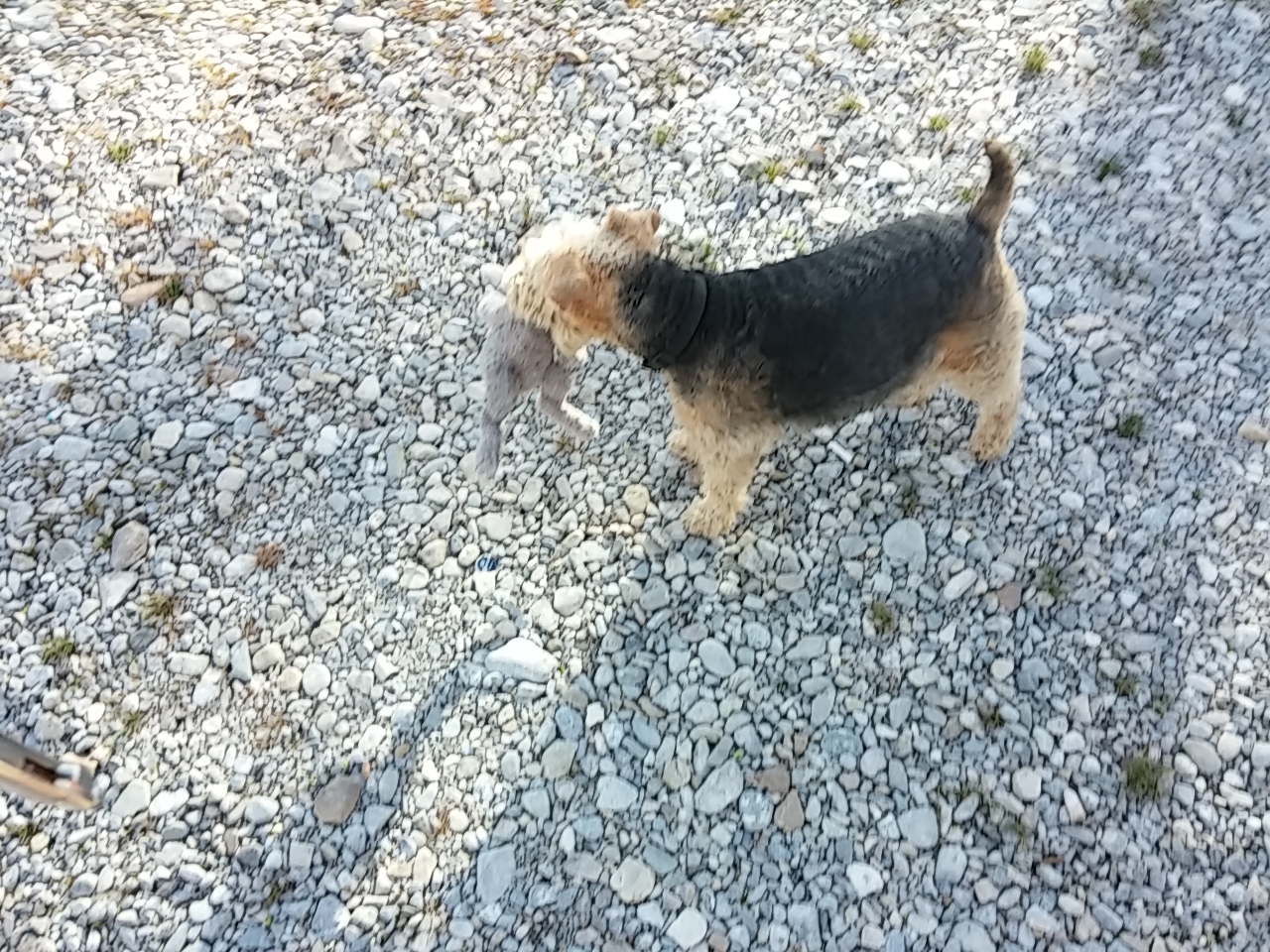
Tending a New Friend
On Homer Dash Patrol
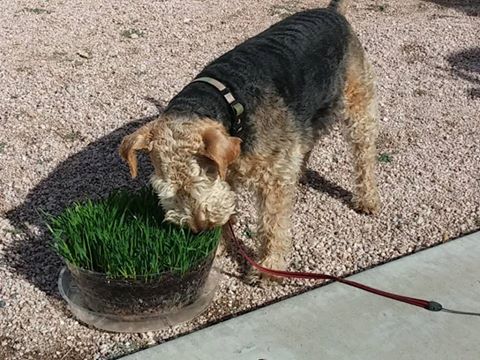
Munching the Pet Grass
Welcoming Richie
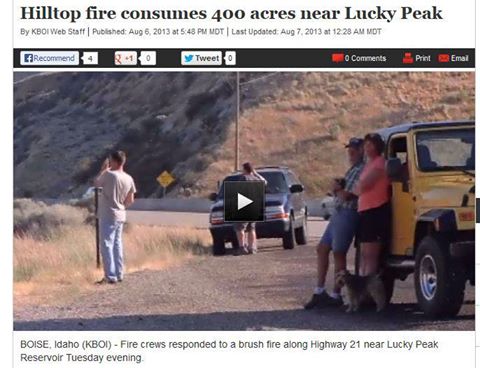
On Local News
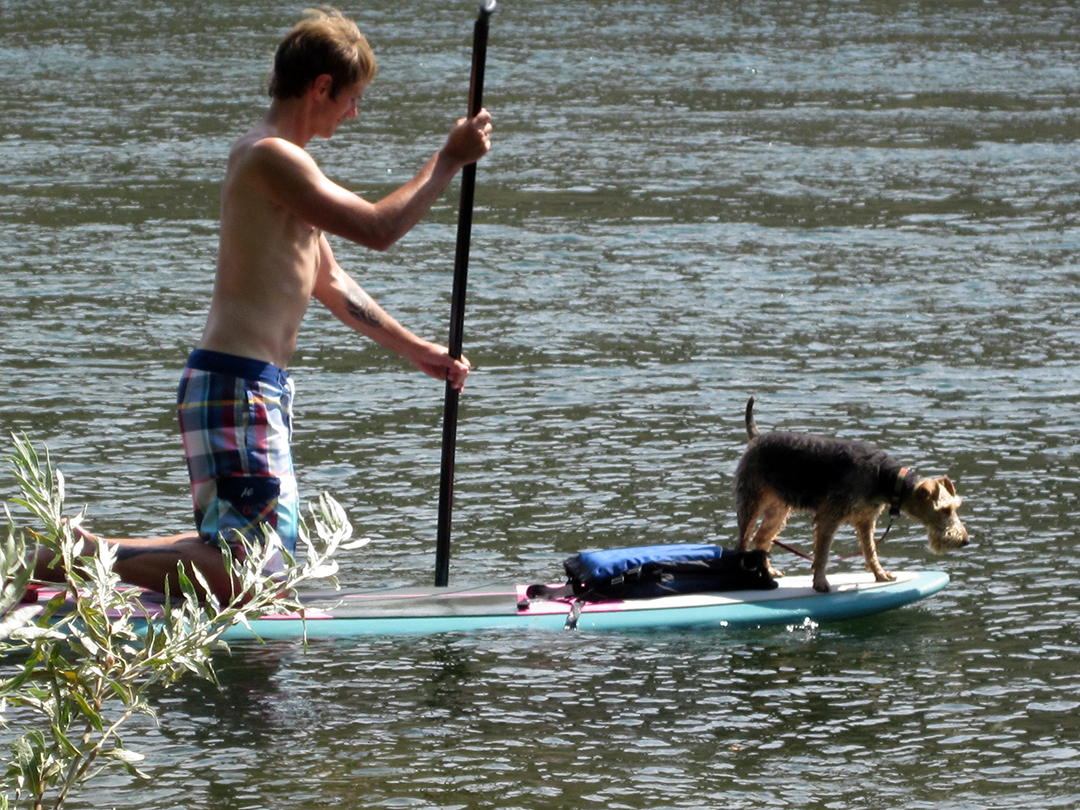
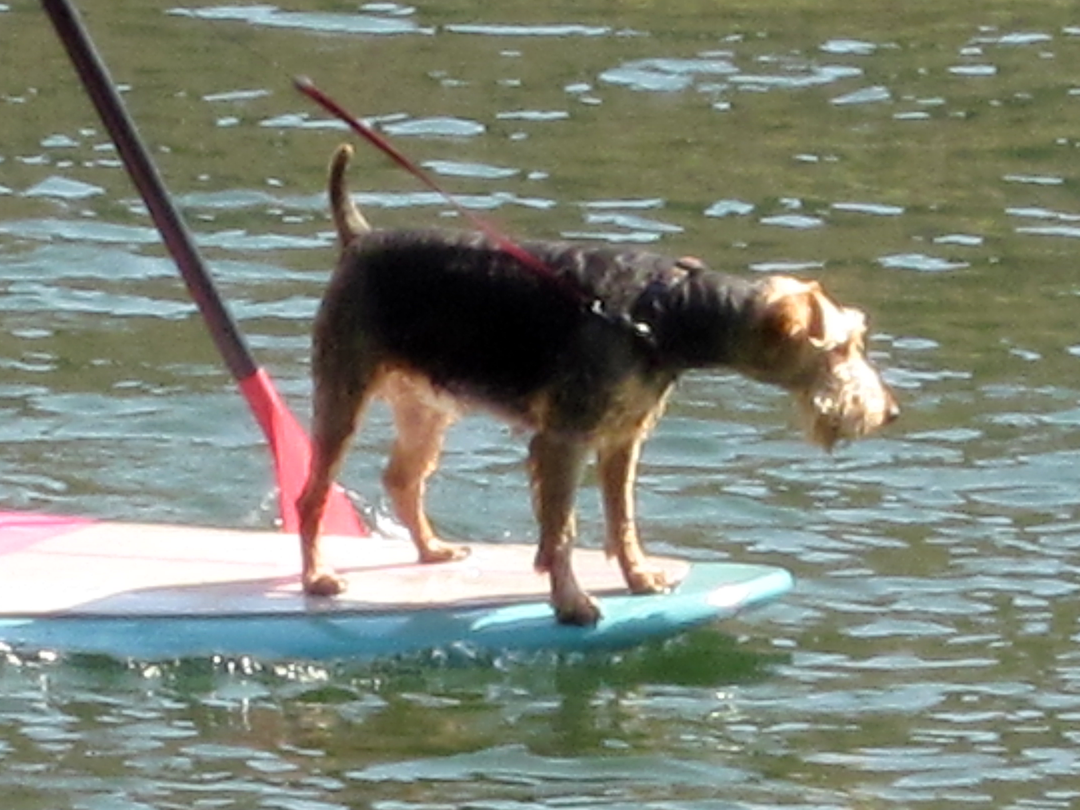
Stand Up Paddleboarding
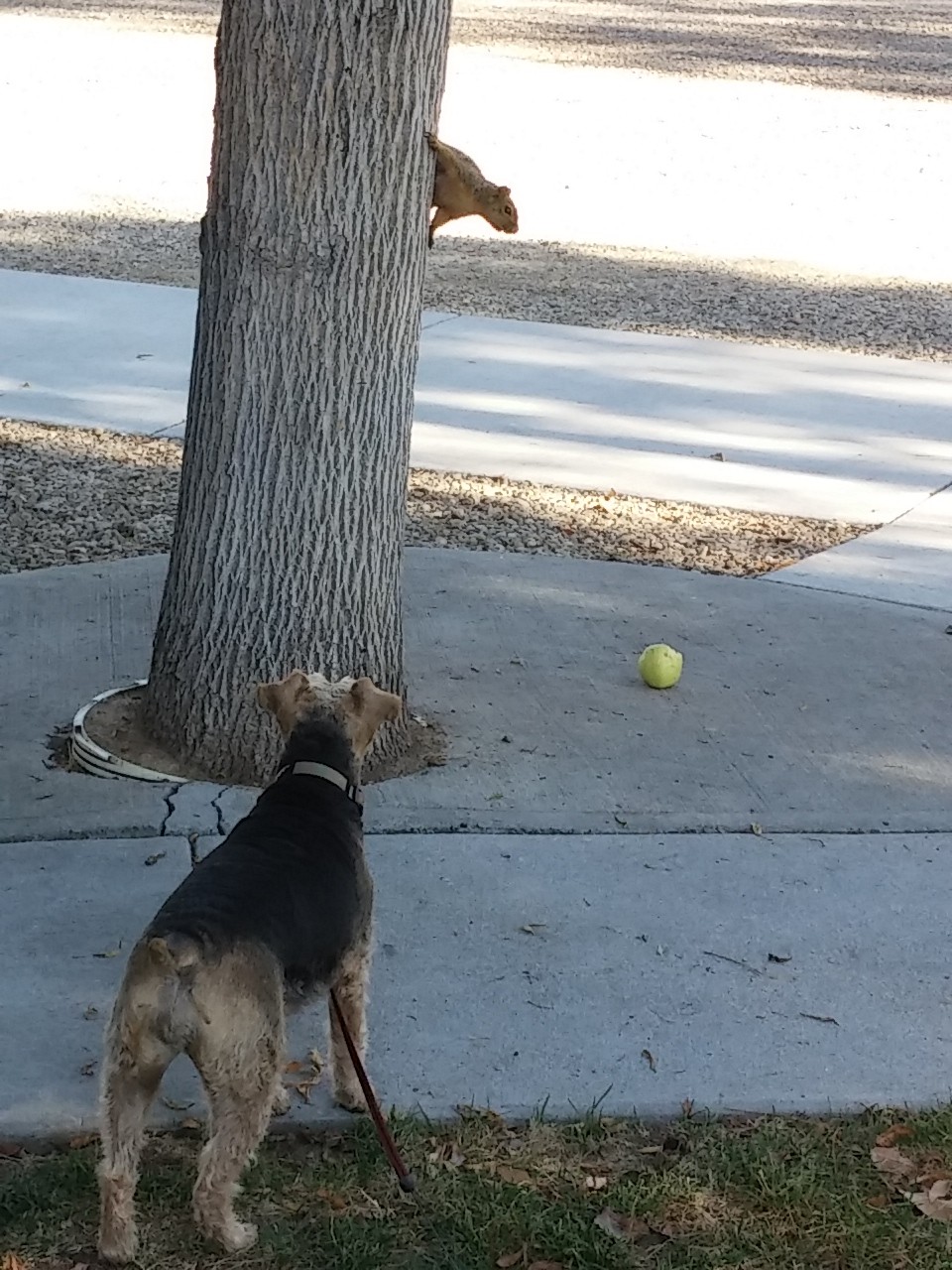
On Squirrel Patrol
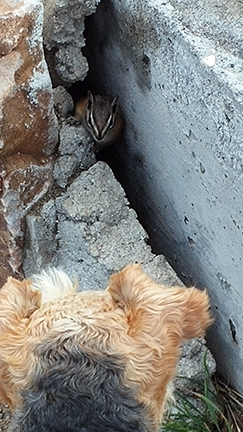
Chipmunk Teasing
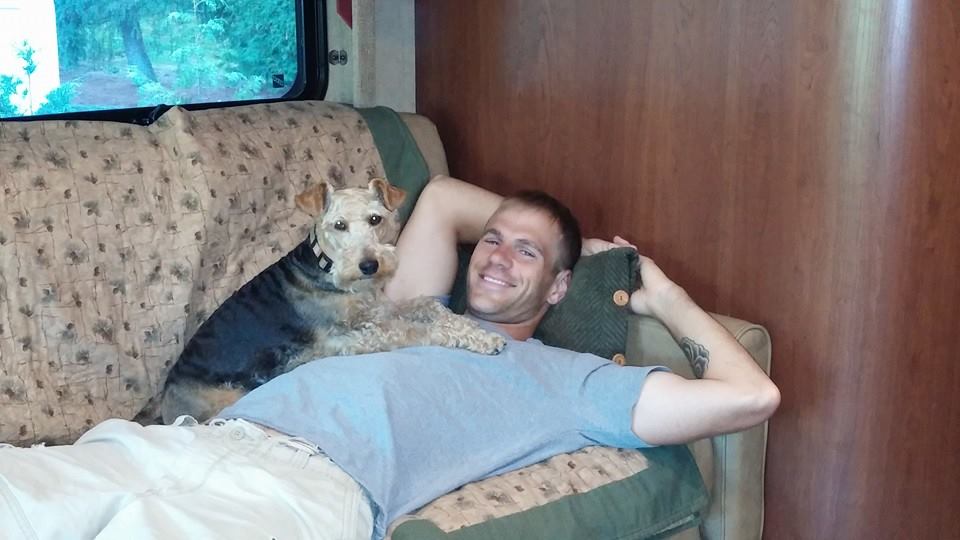
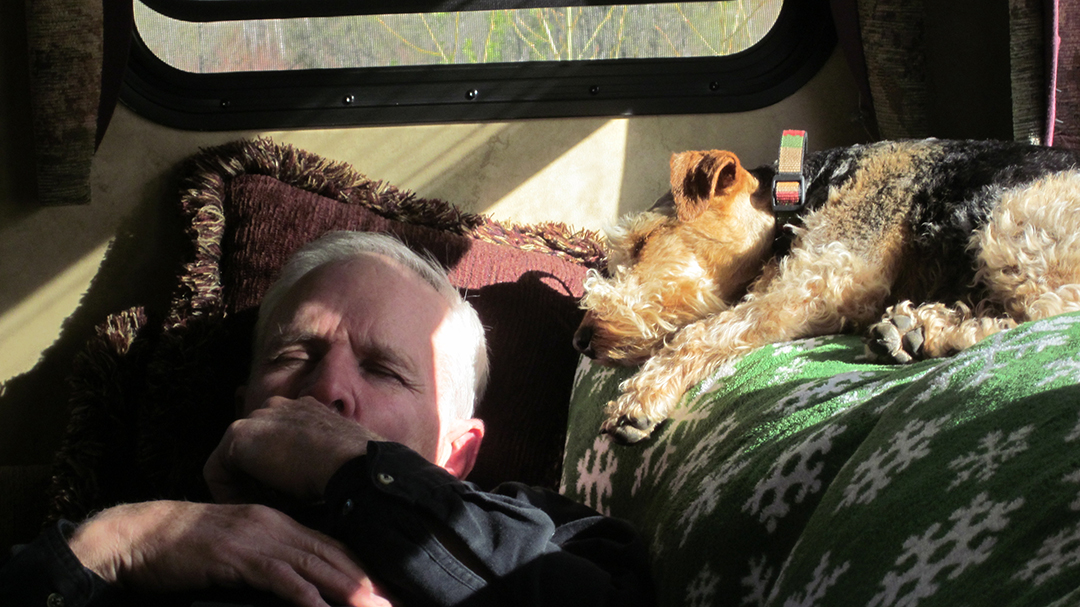
Napping with Rich
“You Looking at Me?”
Looking for “My People”
Swimming
I LOVE MY DOG! (And she loves me ALMOST as much as she loves Rich!)
So I just figured out in the last eleven months, I’ve probably driven less than 30 times.
Yep, less than three times month.
Rich has done all of the motor home driving.
And he’s done all of the Jeep driving when we’re together.
The only time I’ve driven is when I go somewhere by myself. And that’s been about three times month.
I didn’t realize how little I’ve driven until I drove to get some Diet Pepsi our first night back in Boise.
Not only was it strange to be driving, it was amazing to drive to the store without having to use Mapquest to find it. For almost a year I’ve had to use my smart phone to figure out how to get to where I need to go.
How refreshing to know where to find my favorite drink quickly here in Boise!
While we were visiting the Great Basin National Park, we stayed in the small town of Baker, Nevada.
Baker is home to 68 people according to the 2010 census. It’s very, very small.
But even though it is small, Baker is very, very interesting…
Clock of the Long Now
The Clock of the Long Now, also called the 10,000-year clock, is a proposed mechanical clock designed to keep time for 10,000 years. The project to build the clock is part of the Long Now Foundation. (Learn more…)
In researching this, I found out that one of the prototypes for this clock is built on land that Jeff Bezos (founder and CEO of amazon.com) owns in Texas. Bezos has donated $42 million towards the project.
The final clock will be housed on land near Baker. (PS You can’t make this stuff up! 🙂 Read more… )
Artists in Residence
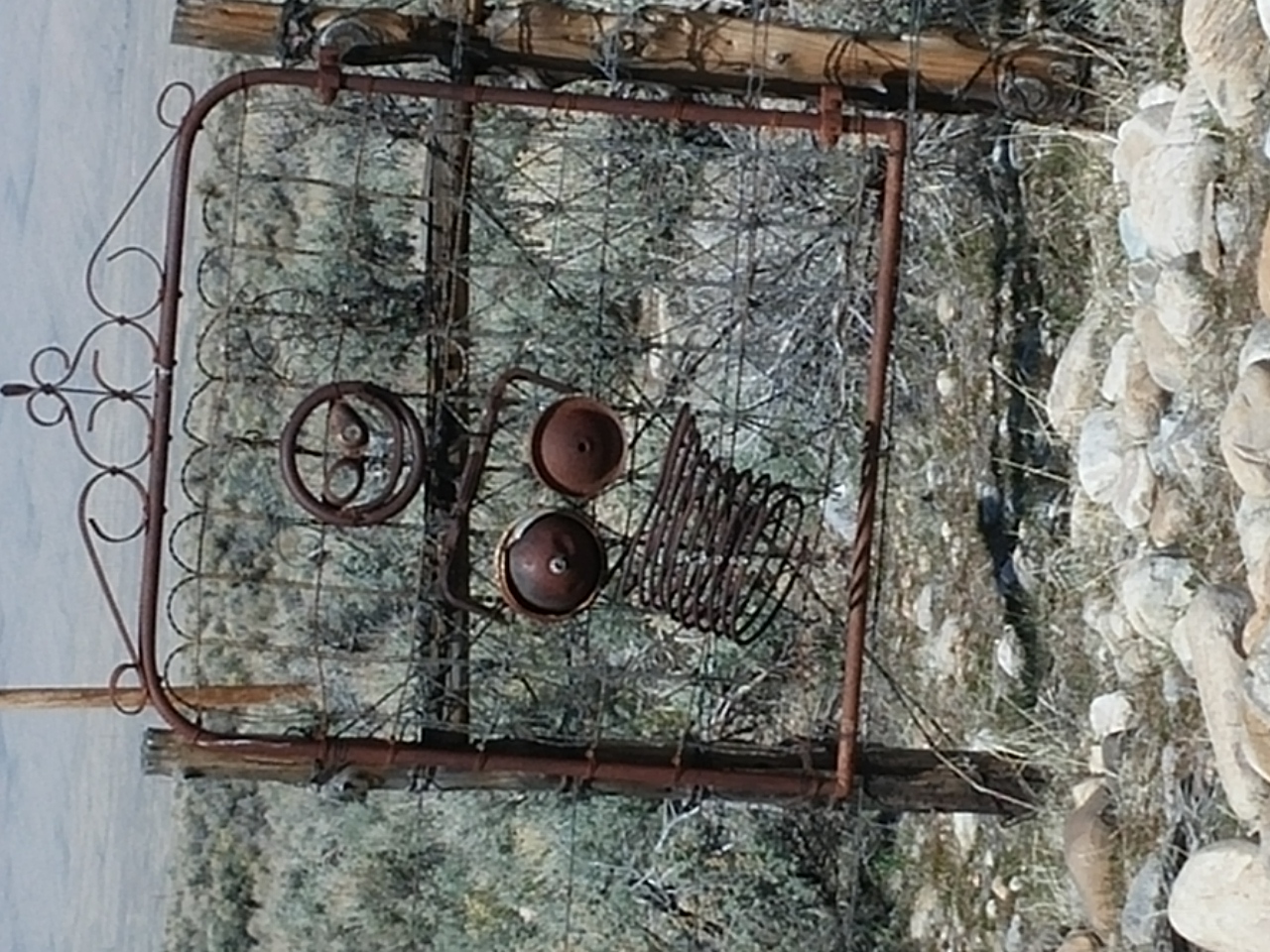
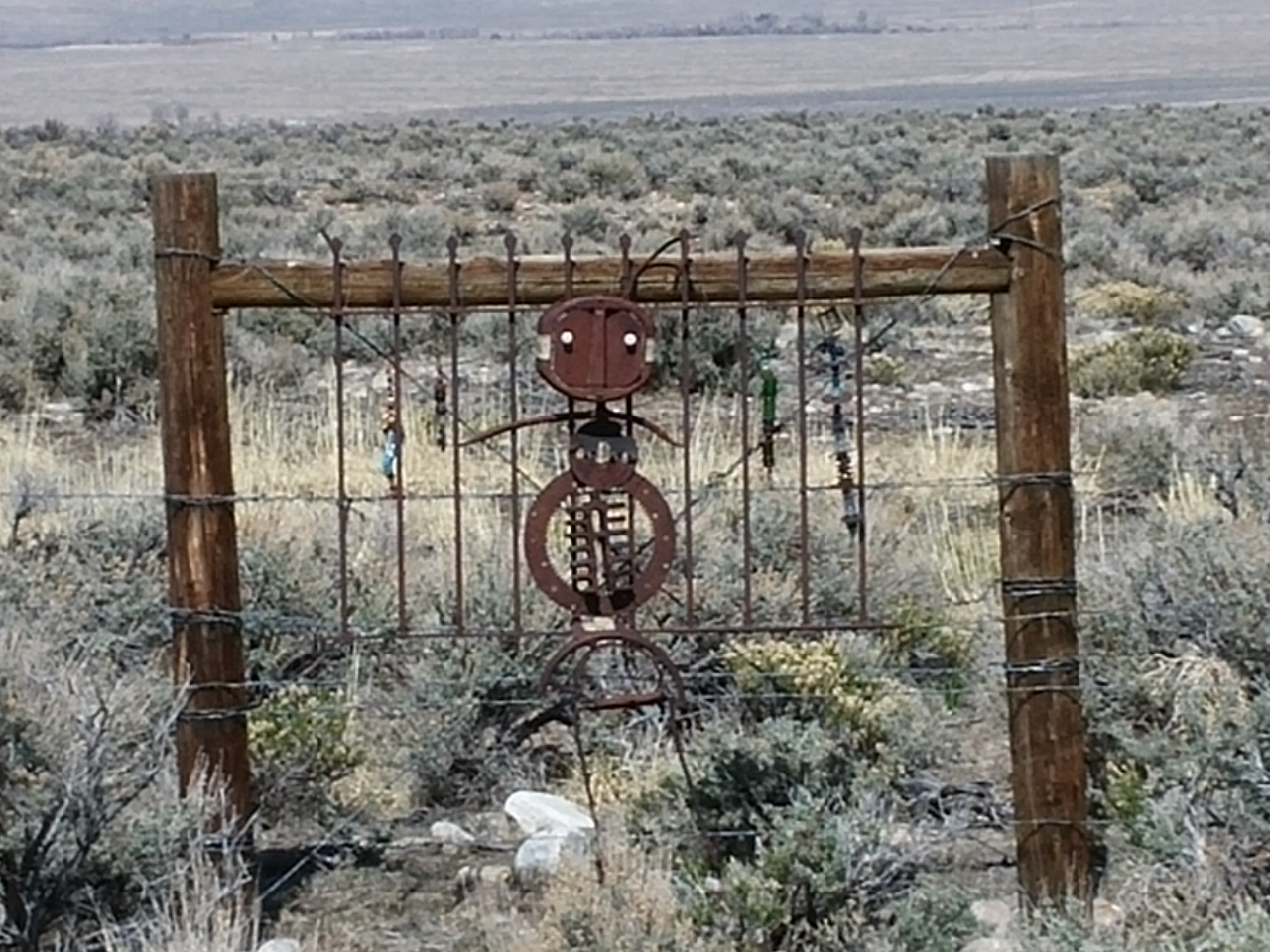
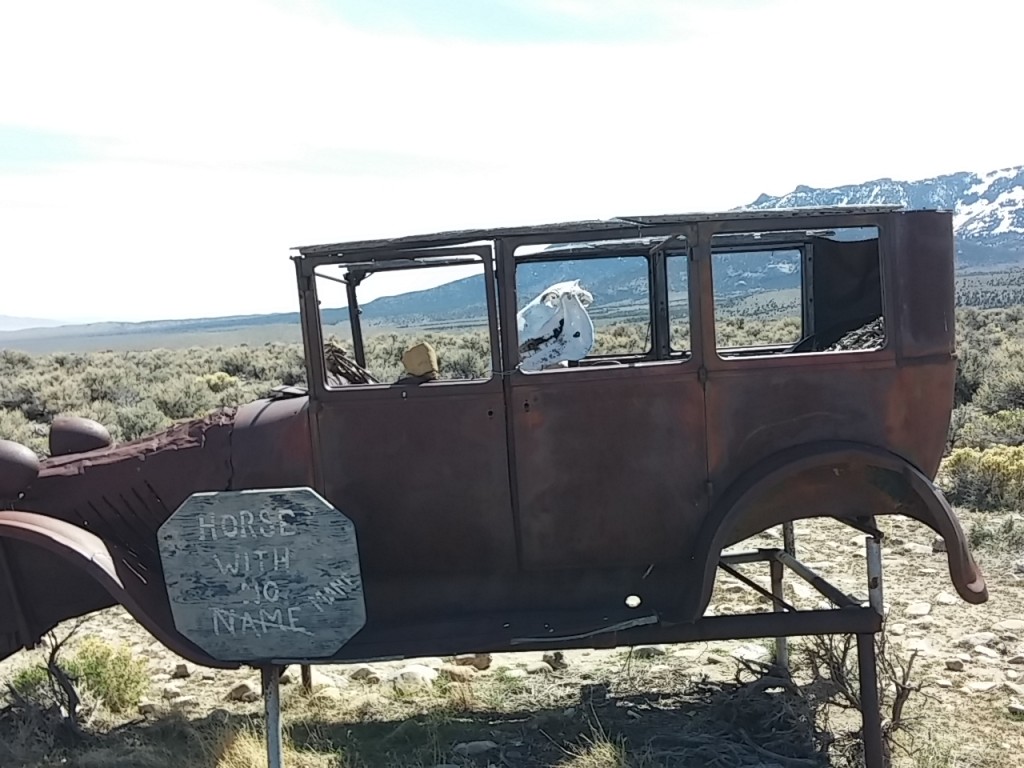
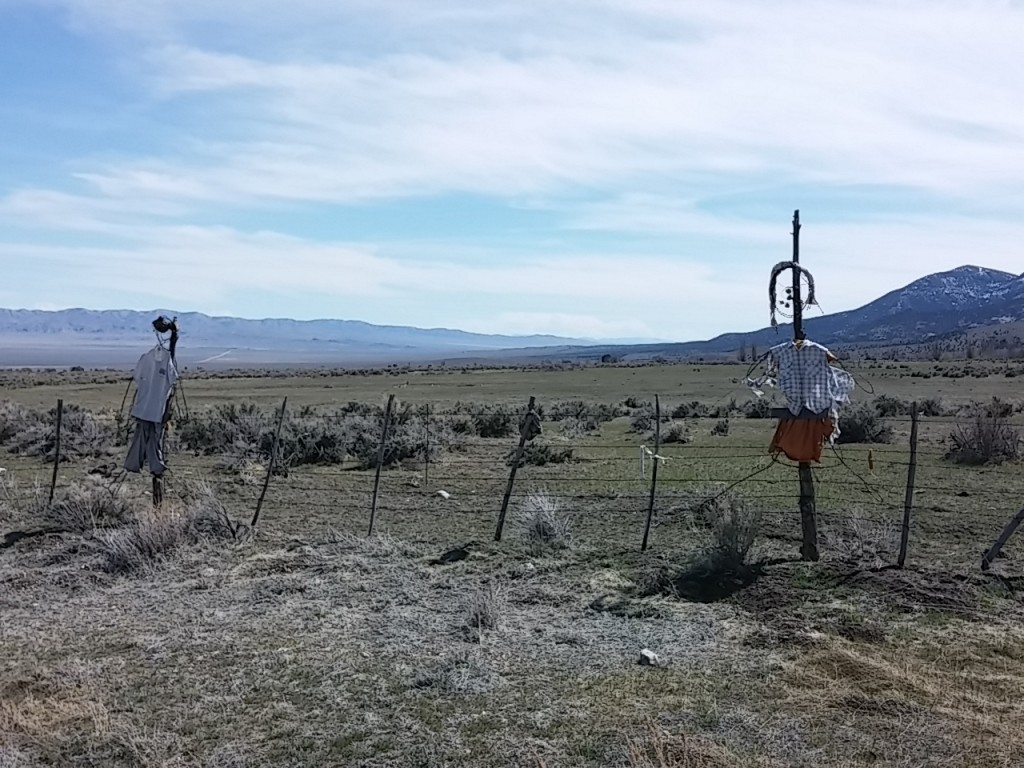
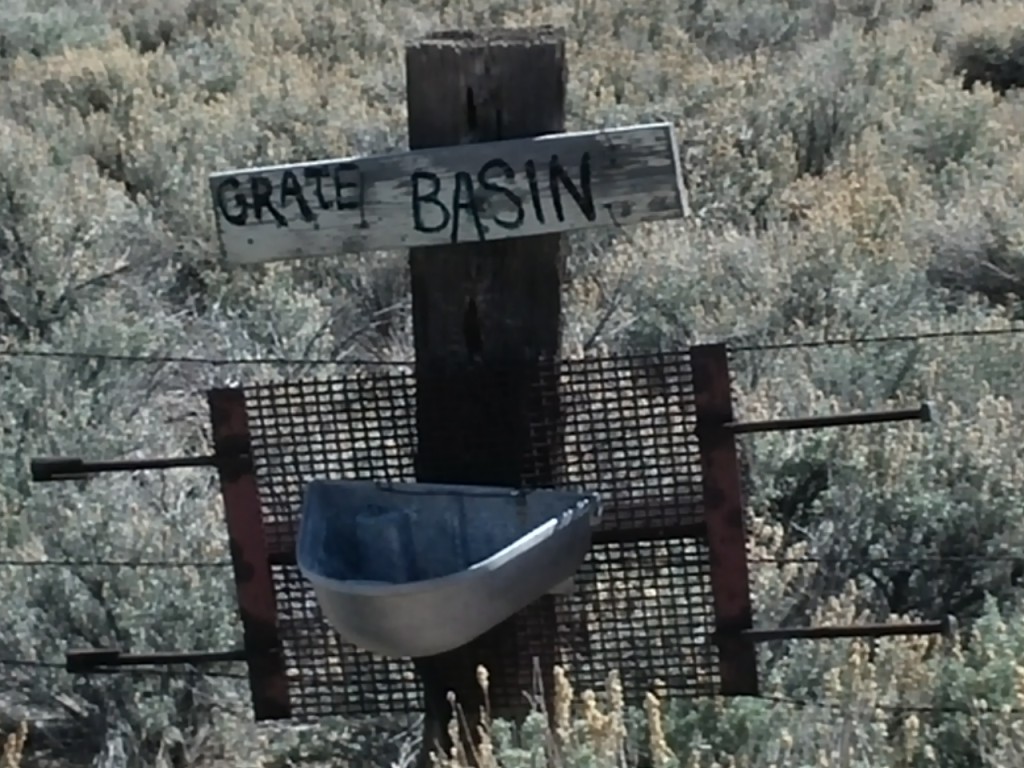
You’ll see a number of tongue-in-cheek “fence-art” sculptures along the roads leading to and from Baker. Termed “Post-Impression Art” by local residents (because the art is mounted on fence posts). The movement began in the mid-1990’s when “Doc” Sherman created the “Permanent Wave Society.” This sculpture consisted of rubber gloves filled with cement and mounted on the tops of fence posts. Doc’s artistic endeavors were amazing therapy for him as he was partially paralyzed by a crippling stroke.
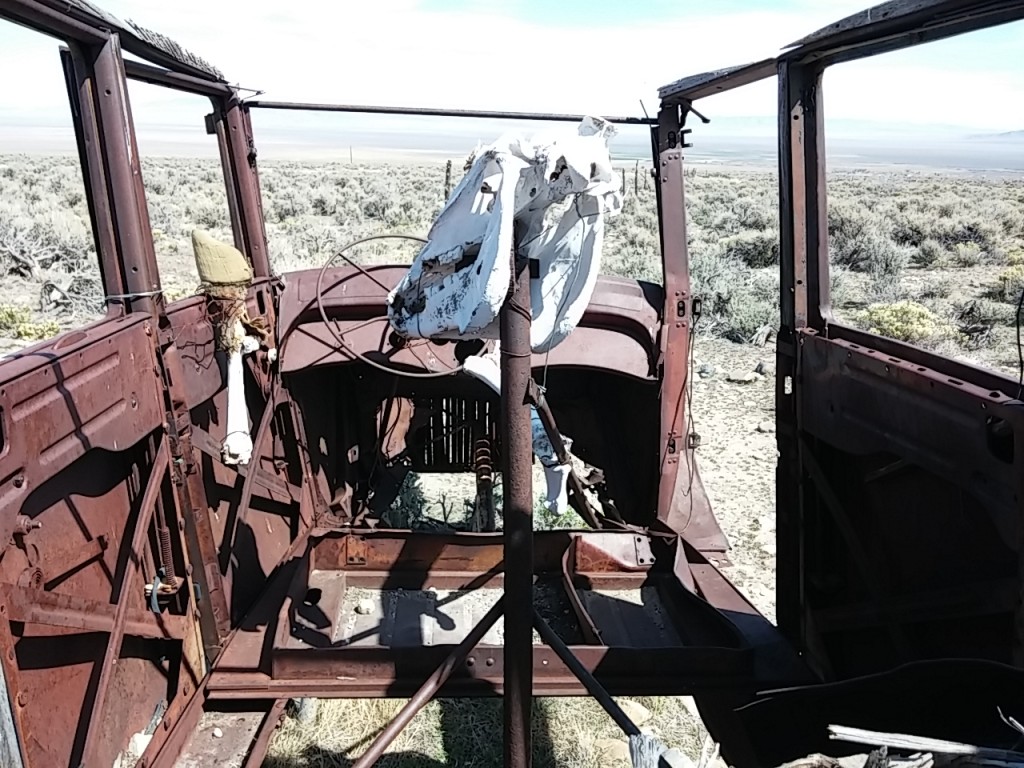
At least one of the artists has a very bizarre sense of humor. This work is named “Horse with No Name Mane”.
And it really is a horse, complete with a skull and the two front legs with hooves.
These two lovers are affectionately called Bob and Barb Wire.
Here’s a tribute to the Grate Basin area. 🙂
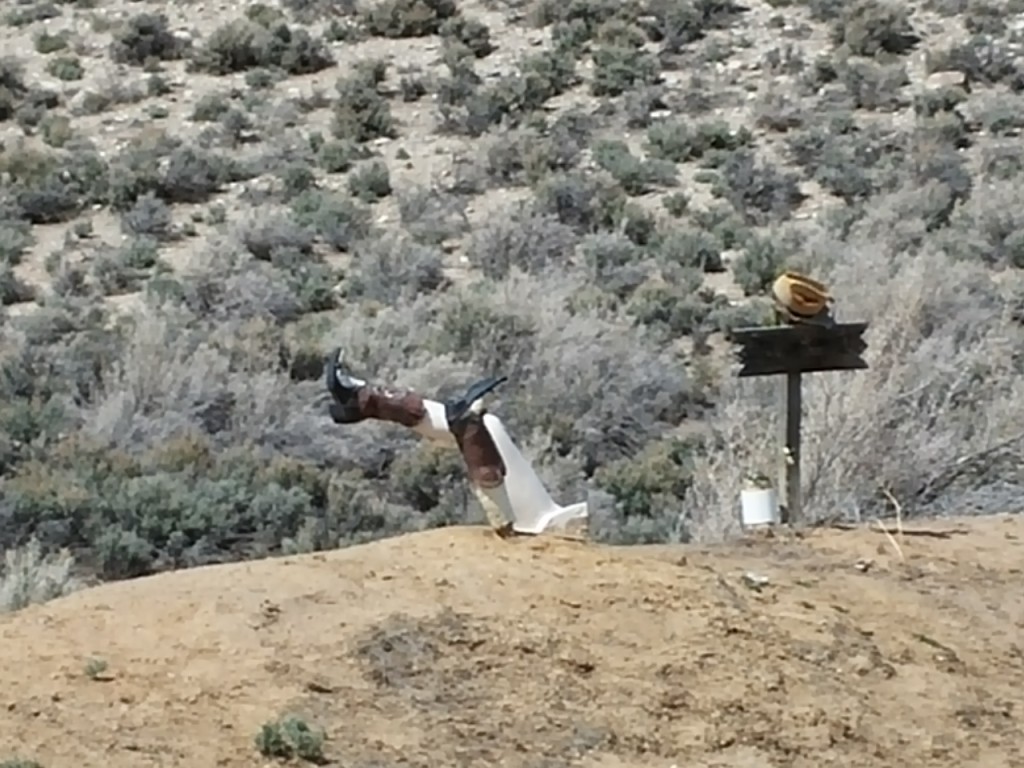
Apparently this guy was too tall for his grave hole.
Water Fights
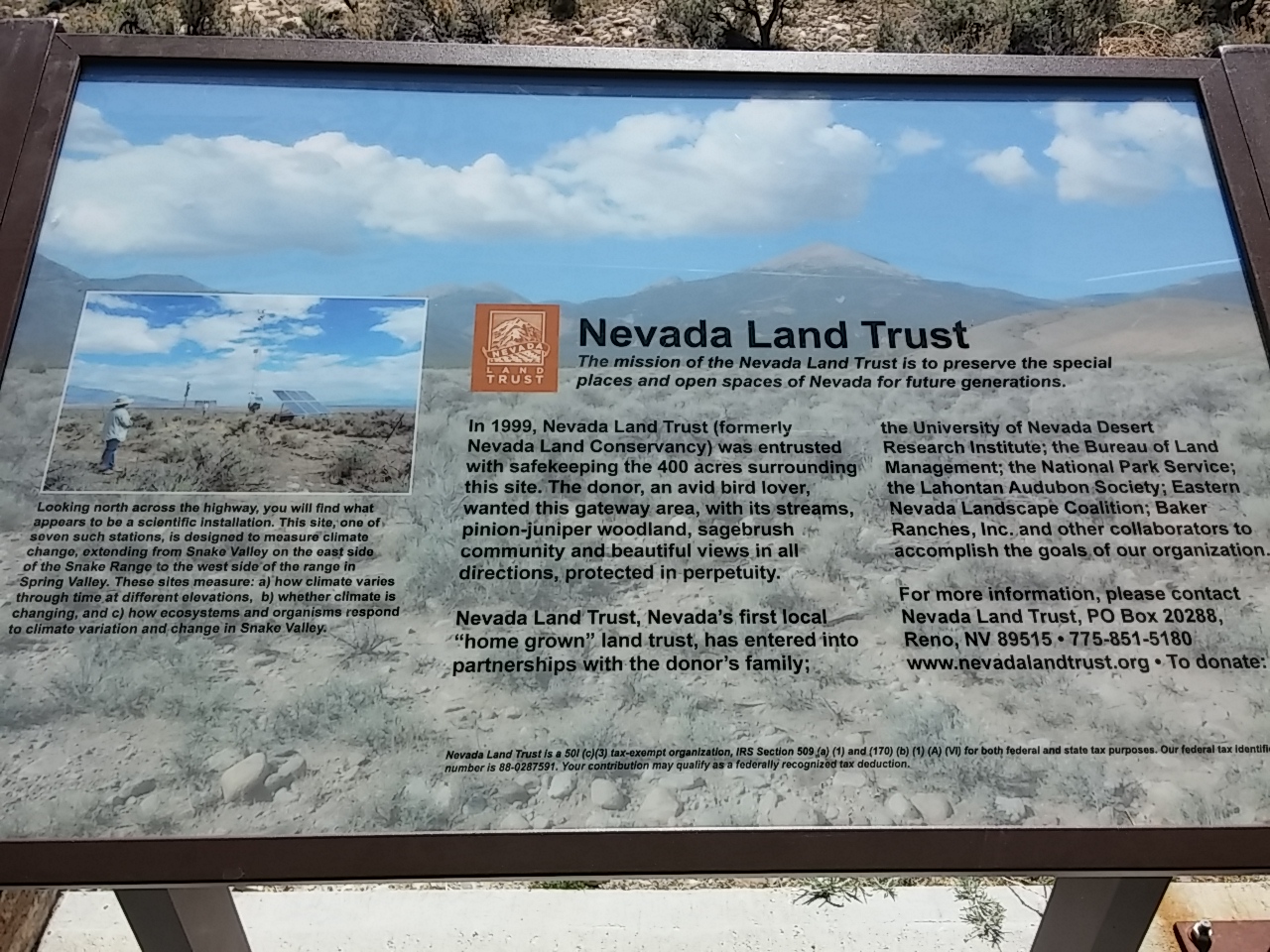
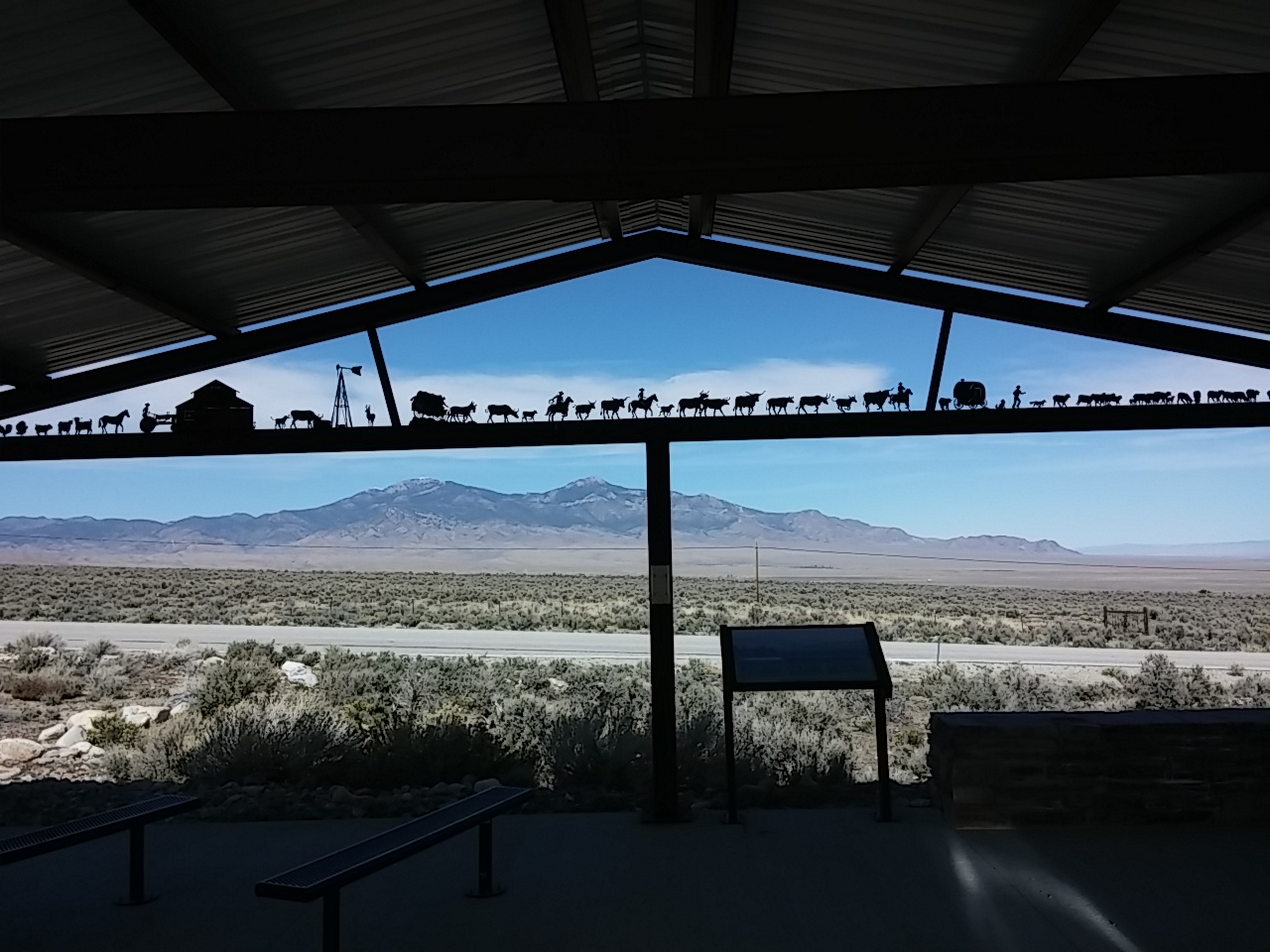
Water is a very precious commodity everywhere, and especially in the drought ridden western US. We paused at an exhibit put together by local ranchers and the Nevada Land Trust explaining ranch life, the use of water, and the practices utilized to increase productivity.
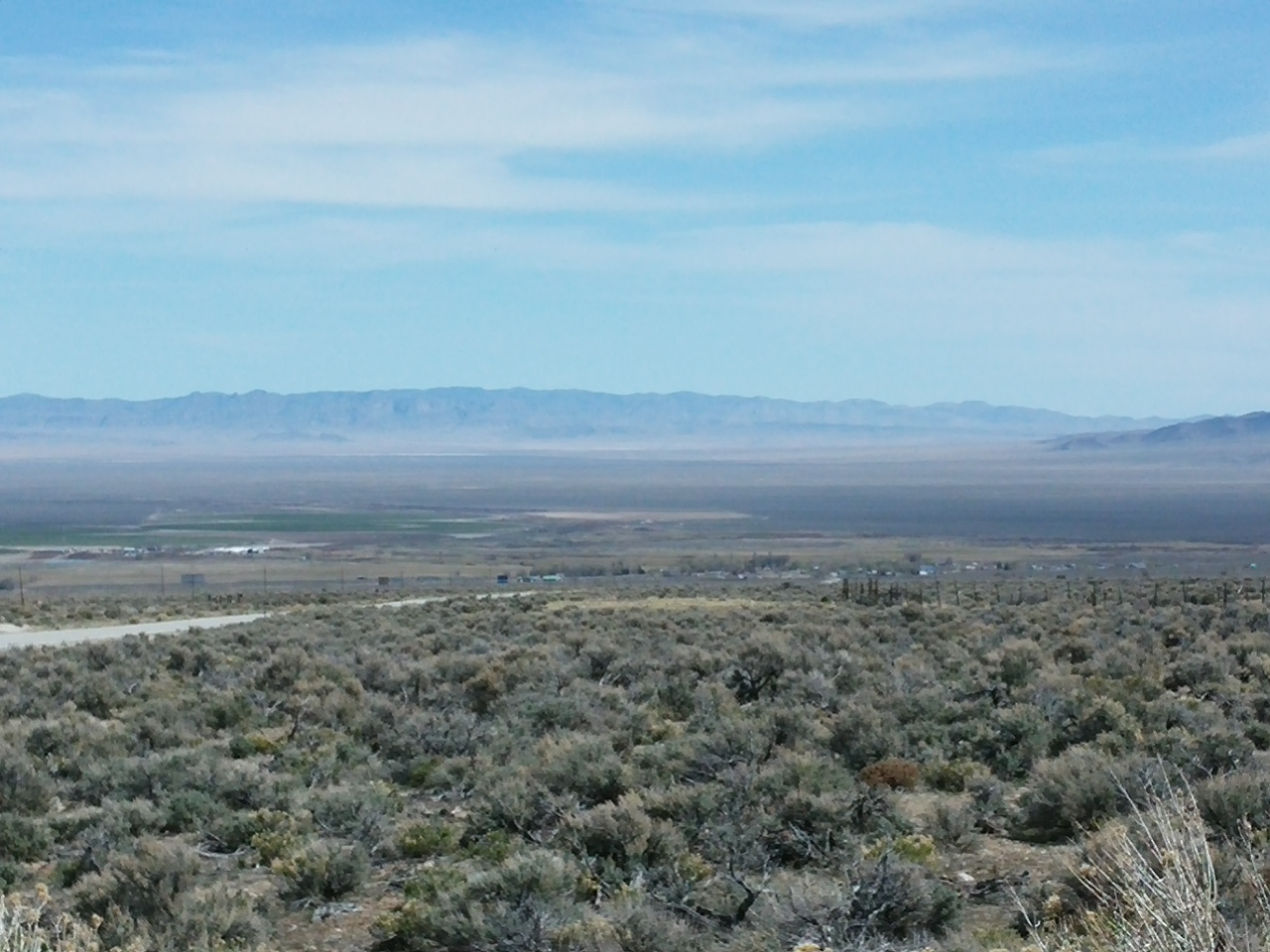
Local ranchers completed the display and the artwork inside. The views from the exhibit show the raw, natural beauty of the area.
Home Means Nevada
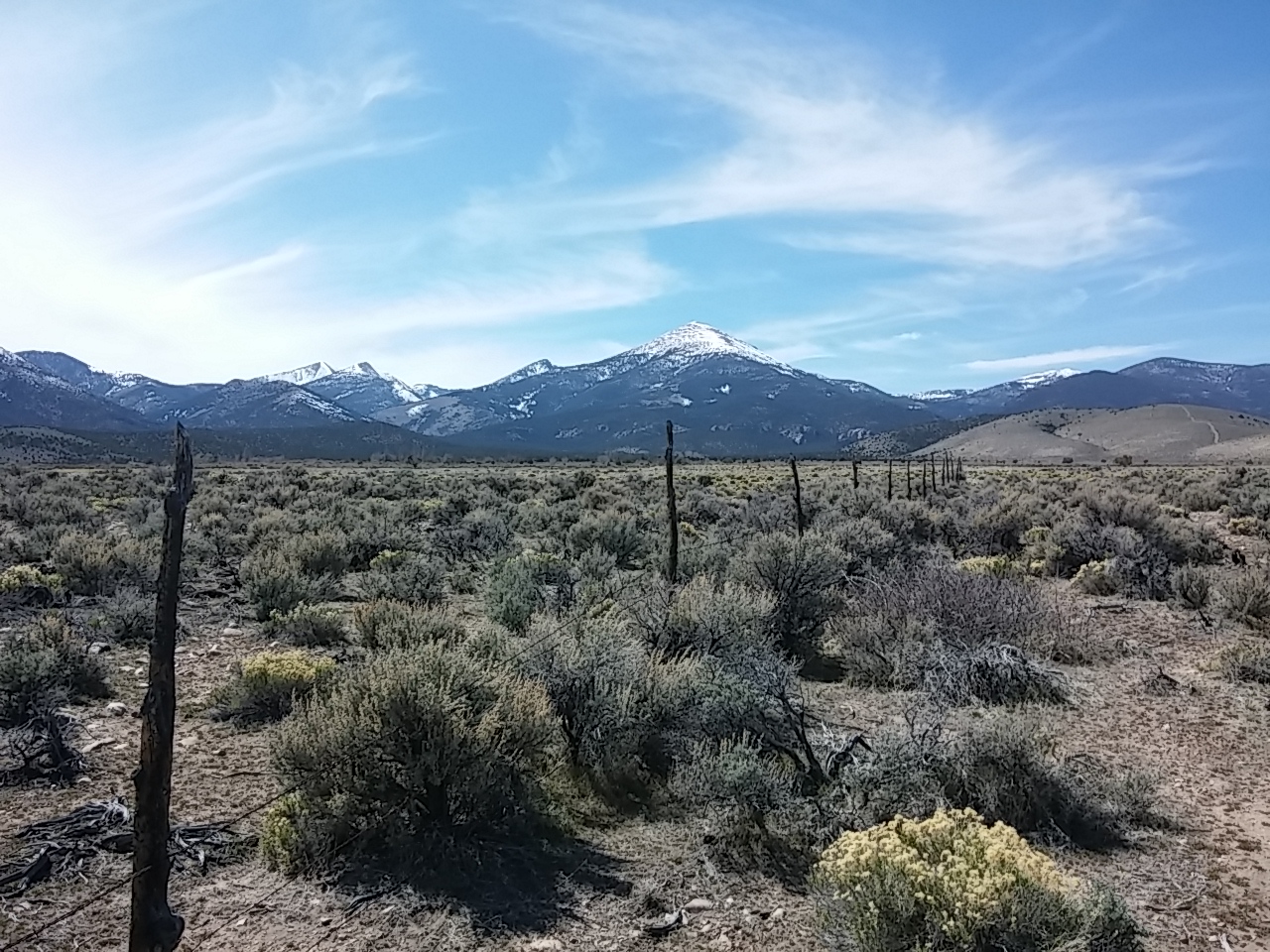
Coming back to Nevada has made me realize that I will always consider Nevada home. The snow covered (hopefully) mountains, the fragrant sagebrush, and the miles of uninhabited lands instill a serenity in me.
I was talking with Rich about this as we drove down a dirt road. He agreed.
And then he said, “But there’s one thing I don’t miss about living in Nevada. Look back in the mirror.”
Following us was a HUGE cloud of dust. 🙂
I don’t want to move back, but I will continue to love to visit Nevada because “Home Means Nevada”.
We went for a tour of Lehman Caves in the Great Basin National Park last week.
Lehman Caves is a single cavern cave that extends a quarter-mile into the limestone and marble that flank the base of the Snake Range. American Indians knew of it long before the rancher and miner Absalom Lehman explored it in 1885. It is one of the regions most profusely decorated caves.
Hundreds of thousands of years ago, surface water, turned slightly acidic from carbon dioxide gas, mixed with water deep below the surface, dissolving the soluble rock at the horizontal water table. Eventually the water drained from the cave, leaving behind hollow rooms and sculptured walls.
In the second stage of development, water percolated down from the surface carrying small amounts of dissolved limestone (calcite). Drop by drop, over centuries, these trickles deposited and built to form the speleothems (cave formations) including stalactites, stalagmites, columns, draperies, ....
This formation is called a shield, and it is a very rare formation found in only a few other caves besides Lehman Caves.
This formation is called popcorn for obvious reasons. :-)
The temperature in the cave is a pretty constant 50 degrees. And the humidity runs about 90 percent, dependent on the amount of snow pack 200' above us on the earth's surface.
Here are some more shields.
As we entered into each section of the cave with our guide Ranger Dusty, he turned on lights as he turned off the lights in the section we just left.
These are called draperies and sometimes they have lighter/darker bands of color called bacon because that's exactly what they look like.
This photo reminds me of a Halloween jack-o-lantern.
Many holes were in the walls and ceiling leading to parts unknown. It felt like we were in a Disney World exhibit--complete with musty smells, damp air, and strategically placed lighting.
Our group of ten plus the ranger were in the cave for 90 minutes. It was interesting to listen to others' questions. Two young men were obviously geologists in training and put the ranger to the test with the complexity of their questions.
This is a portion of what's on much of the cave walls and floor. It's layer upon layer of deposits made over eons...
At the start of the tour, Ranger Dusty turned off all lights for about five minutes. We literally couldn't see a thing.
I didn't realize until then how seldom, if ever, I'm in complete darkness. It was totally black and I couldn't see my hand two inches in front of my face. Surreal and weird. Just like the cavern formations...
While driving around the Panguitch area the other day, we ran into a cattle drive. A real cattle drive with real cowboys and cowgirls…
My count estimated about 100 cows and 14 cowboys and cowgirls.
The road we were on is well traveled to a unique geological site, so the cowboys had to deal with lots of cars.
The couple in the car coming towards us through the herd had huge grins on their faces. They were from California, and I doubt they’ve witnessed a cattle drive before let alone drove through one. 🙂
We were really lucky and ran into the drive both ways.
Cows are much easier to drive through if you are hitting them head on. They easily veer to the side of the road to get out of the way.
But if you are driving the same way they are walking, they are content just to meander slowly along their way.
This cow was one of five that wore a bell. Within a herd a small number of cows wear bells for several reasons:
to help ward off predators because of the constant clanging,
to help other cows stay near because they know where the rest of the herd is,
and to help the cowboys locate cows when it’s roundup time.
Take a really close look at the cowboys in this picture.
Yep, they really are cowBOYS! The boys are off on spring break and they are helping with the drive. They were so incredibly cute. They were fully outfitted from spurs to chaps to hats. Their hats were nearly as big as they were. And their grins were even bigger! 🙂
Late last week we traveled along Utah’s Scenic Byway from near Bryce Canyon to Boulder, Utah. What an amazing road!
Scenic Byway 12 takes you to the heart of the American West. This exceptional 124-mile route negotiates an isolated landscape of canyons, plateaus, and valleys ranging from 4,000 to 9,000 feet above sea level. You’ll encounter archaeological, cultural, historical, natural, recreational, and scenic qualities while driving this exhilarating byway.
Our journey was about 75 miles of the 124 miles total on the road which has been designated as one of America’s 150 Byways.
First up? Red Canyon. A beautiful canyon that has a paved bike and walking trail. Note to self: Carve time to ride or jog this next time we’re here. Oh, and don’t forget to wash the windows in the Jeep if you’re going to take pictures while driving… 🙂
Loved this old gasoline pump and the signage that read, “Too Pooped to Pump”! This is Grosvenor Arch, a unique sandstone double arch that is located within the Grand Staircase-Escalante National Monument. It is named to honor a former president of the National Geographic Society. The arch is over 150′ tall.
Next up along our drive was a badlands area. Badlands are a type of dry terrain where softer rock and clay-rich soils have been extensively eroded by wind and water. The badlands were a fascinating contrast against the far away red hoodoos of Bryce Canyon.
The most scenic area of the drive was from just outside of Escalante to Boulder. Much of the road here was built from 1935 to 1940 by the Civilian Conservation Corps. The road was built directly on rock; miles and miles of it!
Nicknamed the Million Dollar Highway because of the back-breaking labor and tons of dynamite blasting through the slickrock terrain. This was done in the days before heavy machinery, so construction debris was removed with horse-drawn scrapers and by hand with picks and shovels.
On some of these pictures you’ll have to look really hard to see the black asphalt ribbon of the road. That shows you the immense size of the road and the length of the road through the rock.
It’s the most amazing road I’ve ever been on. Ever…
On another part of the road, we were literally driving up to and along the top of the mountain ridge.
The mountain falls off dramatically hundreds of feet on each side of this ridge. You never know what’s around a bend…
What a surprise to see an RV Park that rents Airstream travel trailers and shows movies on a drive in screen!
We stopped to eat a picnic lunch and had a visitor. 🙂
We weren’t able to do any hiking inside Bryce Canyon National Park because we had Sophie and dogs aren’t allowed on trails.
But we did find a hike on the outskirts of the park that was short. And it was cool enough that we didn’t have to worry about leaving Sophie in the Jeep.
It’s a hike to both a waterfall and a mossy cave. Cool!
It was the first time we saw the hoodoos (rock columns and towers) from below and they looked very different up close and from below. We could see more texture in the rocks and the subtlety of the color changes throughout the rocks.
Pioneers labored for two years to complete the Tropic Ditch, an irrigation canal, to bring water to the valley below. Water has flowed along the route, except for during the severe drought of 2002, for over a century. Looking at the small snow pack and the amount of water coming down makes me wonder if 2002 is being repeated.
At times, the water must really roar through the area as evidenced by the size of this pine tree trunk at the edge of the wash.
There’s a bridge across the Water Canyon dry wash area.
I was entranced by the series of small arches that peek-a-booed through the trees as we hiked.
The mossy cave usually has ice until sometime in April, but it’s been such a warm spring that there’s only one small chunk. The moss on the cave’s roof is saturated with water from springs.
I love, love, love this quote by LBJ that I saw in Bryce Canyon:
“If future generations are to remember us more with gratitude than sorrow, we must achieve more than just the miracles of technology.
We must also leave them a glimpse of the world as it was created, not just as it looked when we got through with it.”
Whenever I see nature’s wonders, I’ll remember this quote and continue to leave no trace of my visit…








 Yep, they really are cowBOYS! The boys are off on spring break and they are helping with the drive. They were so incredibly cute. They were fully outfitted from spurs to chaps to hats. Their hats were nearly as big as they were.


 It’s the most amazing road I’ve ever been on. Ever…