Sophie Knows Shoes

Bend, Oregon

FourWheelerWithSophie

We’re pretty sure that Sophie, our dog, stood too long in the cute line and not long enough in the smart line. 🙂

But everyone once in a while she surprises us.

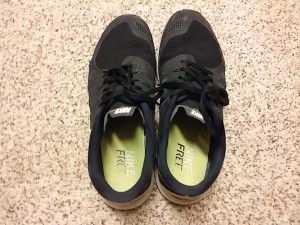
I’m convinced that she knows the difference between my shoes.

These shoes are for pickleball, and when I put them on she sighs and walks away because she knows she’s not invited.

Shoes-3

These shoes are for walking and jogging. When I put them on she goes crazy wild with barking and trying to untie my shoe laces. 
Shoes-1

And these shoes are for getting in the car and going for a ride. And when I put them on she goes crazy wild with barking and trying to untie my shoe laces.

Shoes-2

Well, now that I think about it, maybe she’s not THAT smart.

It appears that she only knows pickleball shoes and gets depressed when I put them on.

All other shoes mean that she’s involved in the activity. And that’s when she goes nuts!


Ripettes Van Winkles

Burns,  Oregon

We are on the road again for a short trip to Bend,  Oregon.  I’m playing in a big pickleball tournament on Saturday and Sunday.

We are taking two days to drive to Bend,  and we left Sophie with Melissa. 

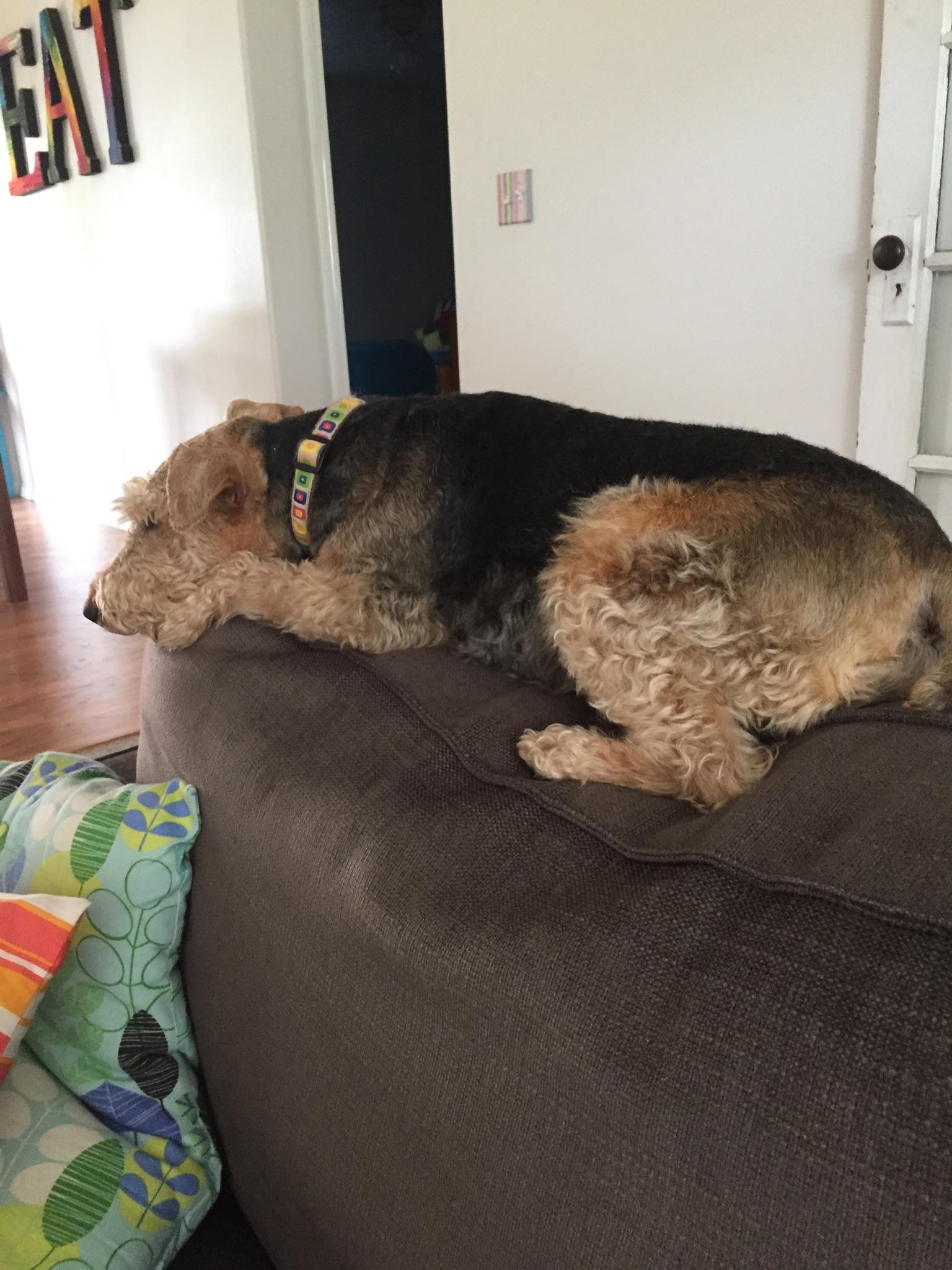
Apparently Sophie and I were both sleep deprived because we both napped and napped and napped yesterday.

Melissa sent  three pictures of Sophie napping in various places throughout the day.

Nap #1

IMG952108

Nap #2

IMG951852

Nap #3

IMG_5788

Not only did  Sophie take multiple naps,  I joined her as a Ripette Van Winkle…

Within  twenty minutes of arriving in Burns,  I listened to my  Hocus Posts relaxation music and promptly fell asleep for a FOUR HOUR nap. 

That’s my longest nap ever! And it was divine!!!!!

photo-main

Best Kitchen Device

About six years ago, we received the BEST kitchen device ever as a gift from our son.

We used it and used it and used it until we finally had to buy a new one from over-use. I’ve lost track of how many we’ve bought as gifts for others…

It’s called Veggie Chop,  and it’s made by Chef’n.

chopper

  • It’s hand powered, so it’s perfect for camping, but it works so gosh-darn well that we use it a couple of times a week.
  • It’s perfect for chopping nuts, veggies, fruit, graham crackers, chocolate, etc…
  • It’s dishwasher safe and quite easy to clean. But be careful of the blades because they are wicked sharp.
  • It’s the best $20 you’ll ever spend your hard earned money on.

Take a look at it in action.

Do yourself a favor and buy one for a gift–for you!

Then you can be as surprised and happy as Mr. Bean is when he sends himself Christmas Cards. 🙂

I Want to Die Like a Doctor…

Bear with me, dear Gentle Blog Reader, because this is a long post.

I came across an article entitled “How Doctors Want to Die is Different than Most People” on CNN.com yesterday. The article is quite good and worth a read. You can read it by clicking on the link…

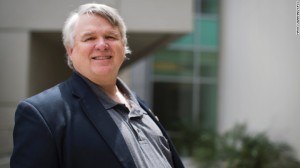
ken-murrayWhat intrigued me the most was the essay that inspired the article; it was written four years ago by Ken Murray, an MD and a Clinical Assistant Professor of Family Medicine at USC.

Below is the essay in its entirety from Zocalo Public Square.

How Doctors Die. It’s Not Like the Rest of Us, But It Should Be.

Years ago, Charlie, a highly respected orthopedist and a mentor of mine, found a lump in his stomach. He had a surgeon explore the area, and the diagnosis was pancreatic cancer. This surgeon was one of the best in the country. He had even invented a new procedure for this exact cancer that could triple a patient’s five-year-survival odds–from 5 percent to 15 percent–albeit with a poor quality of life. Charlie was uninterested. He went home the next day, closed his practice, and never set foot in a hospital again. He focused on spending time with family and feeling as good as possible. Several months later, he died at home. He got no chemotherapy, radiation, or surgical treatment. Medicare didn’t spend much on him.

It’s not a frequent topic of discussion, but doctors die, too. And they don’t die like the rest of us. What’s unusual about them is not how much treatment they get compared to most Americans, but how little. For all the time they spend fending off the deaths of others, they tend to be fairly serene when faced with death themselves. They know exactly what is going to happen, they know the choices, and they generally have access to any sort of medical care they could want. But they go gently.

Of course, doctors don’t want to die; they want to live. But they know enough about modern medicine to know its limits. And they know enough about death to know what all people fear most: dying in pain, and dying alone. They’ve talked about this with their families. They want to be sure, when the time comes, that no heroic measures will happen–that they will never experience, during their last moments on earth, someone breaking their ribs in an attempt to resuscitate them with CPR (that’s what happens if CPR is done right).

Almost all medical professionals have seen what we call “futile care” being performed on people. That’s when doctors bring the cutting edge of technology to bear on a grievously ill person near the end of life. The patient will get cut open, perforated with tubes, hooked up to machines, and assaulted with drugs. All of this occurs in the Intensive Care Unit at a cost of tens of thousands of dollars a day. What it buys is misery we would not inflict on a terrorist. I cannot count the number of times fellow physicians have told me, in words that vary only slightly, “Promise me if you find me like this that you’ll kill me.” They mean it. Some medical personnel wear medallions stamped “NO CODE” to tell physicians not to perform CPR on them. I have even seen it as a tattoo.

To administer medical care that makes people suffer is anguishing. Physicians are trained to gather information without revealing any of their own feelings, but in private, among fellow doctors, they’ll vent. “How can anyone do that to their family members?” they’ll ask. I suspect it’s one reason physicians have higher rates of alcohol abuse and depression than professionals in most other fields. I know it’s one reason I stopped participating in hospital care for the last 10 years of my practice.

How has it come to this–that doctors administer so much care that they wouldn’t want for themselves? The simple, or not-so-simple, answer is this: patients, doctors, and the system.

To see how patients play a role, imagine a scenario in which someone has lost consciousness and been admitted to an emergency room. As is so often the case, no one has made a plan for this situation, and shocked and scared family members find themselves caught up in a maze of choices. They’re overwhelmed. When doctors ask if they want “everything” done, they answer yes. Then the nightmare begins. Sometimes, a family really means “do everything,” but often they just mean “do everything that’s reasonable.” The problem is that they may not know what’s reasonable, nor, in their confusion and sorrow, will they ask about it or hear what a physician may be telling them. For their part, doctors told to do “everything” will do it, whether it is reasonable or not.

The above scenario is a common one. Feeding into the problem are unrealistic expectations of what doctors can accomplish. Many people think of CPR as a reliable lifesaver when, in fact, the results are usually poor. I’ve had hundreds of people brought to me in the emergency room after getting CPR. Exactly one, a healthy man who’d had no heart troubles (for those who want specifics, he had a “tension pneumothorax”), walked out of the hospital. If a patient suffers from severe illness, old age, or a terminal disease, the odds of a good outcome from CPR are infinitesimal, while the odds of suffering are overwhelming. Poor knowledge and misguided expectations lead to a lot of bad decisions.

But of course it’s not just patients making these things happen. Doctors play an enabling role, too. The trouble is that even doctors who hate to administer futile care must find a way to address the wishes of patients and families. Imagine, once again, the emergency room with those grieving, possibly hysterical, family members. They do not know the doctor. Establishing trust and confidence under such circumstances is a very delicate thing. People are prepared to think the doctor is acting out of base motives, trying to save time, or money, or effort, especially if the doctor is advising against further treatment.

Some doctors are stronger communicators than others, and some doctors are more adamant, but the pressures they all face are similar. When I faced circumstances involving end-of-life choices, I adopted the approach of laying out only the options that I thought were reasonable (as I would in any situation) as early in the process as possible. When patients or families brought up unreasonable choices, I would discuss the issue in layman’s terms that portrayed the downsides clearly. If patients or families still insisted on treatments I considered pointless or harmful, I would offer to transfer their care to another doctor or hospital.

Should I have been more forceful at times? I know that some of those transfers still haunt me. One of the patients of whom I was most fond was an attorney from a famous political family. She had severe diabetes and terrible circulation, and, at one point, she developed a painful sore on her foot. Knowing the hazards of hospitals, I did everything I could to keep her from resorting to surgery. Still, she sought out outside experts with whom I had no relationship. Not knowing as much about her as I did, they decided to perform bypass surgery on her chronically clogged blood vessels in both legs. This didn’t restore her circulation, and the surgical wounds wouldn’t heal. Her feet became gangrenous, and she endured bilateral leg amputations. Two weeks later, in the famous medical center in which all this had occurred, she died.

It’s easy to find fault with both doctors and patients in such stories, but in many ways all the parties are simply victims of a larger system that encourages excessive treatment. In some unfortunate cases, doctors use the fee-for-service model to do everything they can, no matter how pointless, to make money. More commonly, though, doctors are fearful of litigation and do whatever they’re asked, with little feedback, to avoid getting in trouble.

Even when the right preparations have been made, the system can still swallow people up. One of my patients was a man named Jack, a 78-year-old who had been ill for years and undergone about 15 major surgical procedures. He explained to me that he never, under any circumstances, wanted to be placed on life support machines again. One Saturday, however, Jack suffered a massive stroke and got admitted to the emergency room unconscious, without his wife. Doctors did everything possible to resuscitate him and put him on life support in the ICU. This was Jack’s worst nightmare. When I arrived at the hospital and took over Jack’s care, I spoke to his wife and to hospital staff, bringing in my office notes with his care preferences. Then I turned off the life support machines and sat with him. He died two hours later.

Even with all his wishes documented, Jack hadn’t died as he’d hoped. The system had intervened. One of the nurses, I later found out, even reported my unplugging of Jack to the authorities as a possible homicide. Nothing came of it, of course; Jack’s wishes had been spelled out explicitly, and he’d left the paperwork to prove it. But the prospect of a police investigation is terrifying for any physician. I could far more easily have left Jack on life support against his stated wishes, prolonging his life, and his suffering, a few more weeks. I would even have made a little more money, and Medicare would have ended up with an additional $500,000 bill. It’s no wonder many doctors err on the side of overtreatment.

But doctors still don’t over-treat themselves. They see the consequences of this constantly. Almost anyone can find a way to die in peace at home, and pain can be managed better than ever. Hospice care, which focuses on providing terminally ill patients with comfort and dignity rather than on futile cures, provides most people with much better final days. Amazingly, studies have found that people placed in hospice care often live longer than people with the same disease who are seeking active cures. I was struck to hear on the radio recently that the famous reporter Tom Wicker had “died peacefully at home, surrounded by his family.” Such stories are, thankfully, increasingly common.

Several years ago, my older cousin Torch (born at home by the light of a flashlight–or torch) had a seizure that turned out to be the result of lung cancer that had gone to his brain. I arranged for him to see various specialists, and we learned that with aggressive treatment of his condition, including three to five hospital visits a week for chemotherapy, he would live perhaps four months. Ultimately, Torch decided against any treatment and simply took pills for brain swelling. He moved in with me.

We spent the next eight months doing a bunch of things that he enjoyed, having fun together like we hadn’t had in decades. We went to Disneyland, his first time. We’d hang out at home. Torch was a sports nut, and he was very happy to watch sports and eat my cooking. He even gained a bit of weight, eating his favorite foods rather than hospital foods. He had no serious pain, and he remained high-spirited. One day, he didn’t wake up. He spent the next three days in a coma-like sleep and then died. The cost of his medical care for those eight months, for the one drug he was taking, was about $20.

Torch was no doctor, but he knew he wanted a life of quality, not just quantity. Don’t most of us? If there is a state of the art of end-of-life care, it is this: death with dignity. As for me, my physician has my choices. They were easy to make, as they are for most physicians. There will be no heroics, and I will go gentle into that good night. Like my mentor Charlie. Like my cousin Torch. Like my fellow doctors.

Ken Murray, MD, is Clinical Assistant Professor of Family Medicine at USC.

Epic Kindness

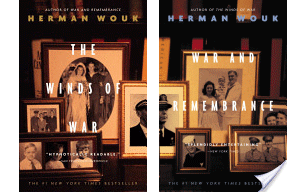
I’m in the process of reading Herman Wouk’s  epic two-volume novel of World War II — The Winds of War (1971) and War and Remembrance (1978).

hw

The books are amazingly detailed and full of history about World War II. At nearly 1000 pages each, I feel like I’ve been in a history class the entire time I’ve been reading them.

Absolutely fascinating. And I’m anxious to learn more about that time period…

On last night’s news, there was an amazing story about the discovery of a cereal box in a house in Tennessee that shows the goodness of people, from both America and Germany, during World War II.

Hundreds of letters stuffed inside the old cereal box recall the experiences of some of the tens of thousands of POWs who were sent to Tennessee during World War II. The letters show epic kindness and love of humanity during an extraordinary situation.

Pickleball Miles


I played pickleball in the Idaho Senior Games on Friday and Saturday.

What a blast!

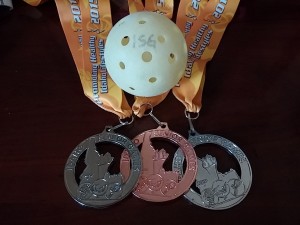
0809151012Played tons of pickleball. Met great people. And even won a couple of medals.

Saturday was my busiest day. I played in ten doubles games and nine singles games.

That’s a lot of pickleball. And that’s a lot of steps.

Alas, I lost my FitBit a while ago, so I don’t know how many steps I took.

But there is a way to figure out how many pickleball miles* I had. 🙂

pbm

Two games of pickleball, well doubles games actually, calculate into one pickleball mile.

Most of my singles matches were close, so there were lots of side outs which means longer play. So even though the rallies don’t last as long in singles games, I’m going to count them each as an actual game.

Therefore I had over NINE pickleball miles yesterday!

Just from this weekend, I’m well on my way to earning my 100 miles club patch. 🙂

Pickleball_Mile_Club_Rewards--element59

(*From The Pickleball Mile sponsored by Pickleball Rocks!)

Yours, Mines, + Ours

Took me a while to figure out that Rich and I are transitioning back into the lives we had before traveling and living in Homer.

We each had, in essence, three lives to worry about: Your life, My life, and Our life.

Hopefully this will help make more sense of it all…

I was living my life, I had some space, both mentally and physically to do my own things.  I could go work on my crafts in “Kathy’s shop”. I could go lay on the hammock and take a nap with Sophie while listening to my music. And so on…

Rich was living his life. He had his shop to go work in. He could go work in the yard, tending the trees. And so on…

And we had our lives together. We went for drives in the mountains. We went for hikes. We discussed future plans. And so on…

YMO

Then we bought a motor home and lived in it for about a year.

Homer has about 250 square feet. There is door to the bathroom, and there is a door to close off the bedroom but I think we only had it closed twice.

We traveled, slept, and lived in that 250 square feet. We only had OUR life. There wasn’t room for Your life and there wasn’t room for My life.

MYO

It took a while to adjust to that, but we really got quite good at it.

That’s why I had no idea that adjusting back into Yours, Mine, and Our lives would be the transition it has been.

It hasn’t been as hard a transition as the one into OUR life, but I sure do wish I would have figured out earlier that there would be a transition.

Now that I have, I should have smooth sailing back into Yours, Mine, and Our lives.

A Different Kind of Make a Wish

From NBC News:

Lucas Hobbs received a lot of help in his battle against cancer.

So, when the 12-year-old’s cancer went into remission, he desperately wanted to pay it forward to those who helped him fight the illness.

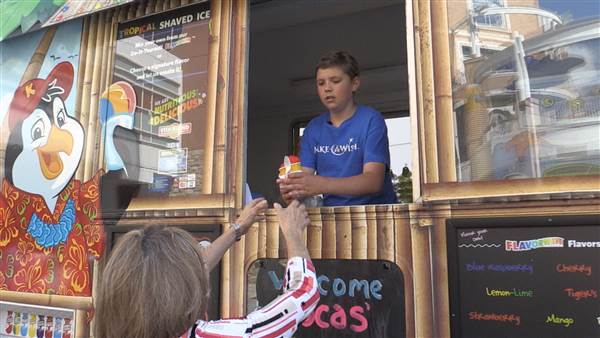
When Lucas got a Make-A-Wish opportunity, he didn’t use it to take a trip to Disneyland or meet his favorite celebrity: Instead, the boy who loves to cook wanted to serve some special dishes for the patients and staff of the Children’s Hospital and Clinics of Minnesota that helped him get well.

“I am here to give back the kindness that everybody gave me when I was sick,” he said. “So I am here to return that kindness.”

He was initially diagnosed with stage-3 Hodgkin’s Lymphoma and didn’t take the news very well, when he got it.

“When I heard my diagnosis, I was in tears,” he said. “I was like, ‘Am I going to die?'”

Lucas underwent chemotherapy for months. And the effect of that made him lose his appetite — especially when it came to hospital food.

“Because I had the chemo, it was messing with my taste buds and I just didn’t like it that much,” he said. “I just did not want to eat at all. It wasn’t fun.”

maw

But Lucas is alleviating what can be a challenging ordeal for patients and their families, giving them good food with fun titles. A cherry flavored ice cone is what Lucas calls a “Blood Transfusion,” and he even named a hot dog after his oncologist, Dr. Joanna Perkins, calling it the “Perkins Dog.”

“I wanted these kids to get something different off the menu,” said Lucas. “I missed all those ribs, pulled pork, all that yummy stuff, while I was at the hospital.”

Lucas made sure that all of those things he missed from French fries to tacos were on the menu as he took orders from his food truck outside the hospital. And for those who couldn’t make the trip outdoors, he even took the food inside.

“They saved his life,” said his father, Matt Hobbs. “Just the compassion and everything, it ultimately resulted in just a little boy deciding to give some of that love back.”

For Lucas, the true payoff comes when he brings food to the staff that helped him and the young patients at the hospital.

” I see just a big smile on their face, just a big smile.”

Genuine Hero

A young man who recently graduated from high school risked his life to save a wheelchair-bound woman from her burning home in Nampa, a small town near Boise.

He calmly explains that he couldn’t see anything because of the smoke, and yet he not only rescued the woman, he went back into the burning house to get her wheelchair. Amazing!

What an inspiration he is. I commend him and his parents–they’ve obviously raised him well. What a genuine hero he is!

From KTVB:

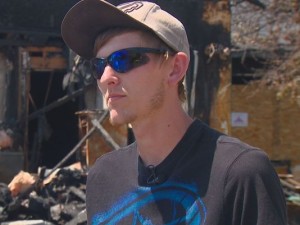
Around nine o’clock Monday, 18-year-old Tristan Reding was driving near Skyview High School, when he saw flames over nearby rooftops. He arrived in front of a home on South Garland Street, and said he saw a tornado of fire, “There were flames flying probably 100 feet in the air… I just wanted to make sure everybody was out and safe.”

Fire trucks were on their way, but not there, yet. So, he went around back, and that’s when he heard two explosions, which turned out to be oxygen tanks. He also heard screaming. Despite seeing a wall of fire and smoke, he ran in. “I jumped the fence, and I kicked in the back door.”

Tristan couldn’t see anything inside, just black smoke. But, he could hear the wheelchair-bound woman, and that was enough. “When I found her, her hair was singed and her arms were burnt up, and every time I picked her up, she screamed because it hurt so bad. She just kept saying, ‘Help me. Help me. Get me out of here. And, I got her out.”

When asked if he could see anything, he said, “No, just the light to get out the door, barely.”

He then went back and even got her wheelchair out. Neighbors helped Tristan get the woman clear of the fire. He said, “Firefighters were all giving me handshakes, and they were like, ‘You saved somebody’s life today.’ It just didn’t feel real.”

GS

But, it was. Now, everyone from the woman’s family to emergency responders to strangers are calling Tristan a hero. He brushes off the label, and his dad says, he was just being Tristan, “He’ll give you the shirt off his back. He’s just that kind of kid… He just did what he thought he should’ve done.”

The cause of the fire is still under investigation. Incredibly, the woman was released from the hospital Tuesday. Reding was checked out and released Monday night.

Gad Zukes!

Meridian, Idaho

Our new home came to us with a small garden.

And that garden obviously has very good dirt!

We’re overrun with zucchini. It feels like we’re having zucchini at every meal…

We try to pick them before they become zumpkins — zucchini as big as pumpkins. 🙂

But  we missed a few that grew big enough to feed a small army.  

0801151308

We’ve given them to friends. I’ve taken them to pickleball practice. And we’re very close to leaving them on neighbors’ doorsteps, but we’re afraid that they will do the same to us if they figure out that we’re the culprits…

I found a great zucchini muffin recipe on-line that I’ve changed a bit to make it healthier with less oil and sugar.

Here it is in case you’re being overrun with zukes and need a way to use them up. These freeze well so you can have fresh (frozen) zucchini all year round.

Zuked Muffins (Makes 12 LARGE or 24 standard)

0730151725Ingredients
3 eggs
1/3 cup oil
1/3 cup applesauce (or 4 ounce individual serving package)
1/3 cup of yogurt
1/2 cup sugar
1/2 cup brown sugar
2 cups grated zucchini
3 cups flour
1 teaspoon baking soda
1/4 teaspoon baking powder
3 teaspoons cinnamon
1 teaspoon salt
1/2 cup Bran Buds cereal (or chopped nuts)
1 cup dried cranberries (or raisins)

NOTE: I use large muffin tins because then I can honestly say, “I only had one!” You will need to adjust the baking time to maybe 20 minutes if you use standard sized tins. 🙂

Directions

  1. 0730151801Beat eggs until light and foamy.
  2. Add sugars, oil and zucchini.
  3. Blend well with spoon or mixer.
  4. Add baking soda, baking powder, cinnamon, and salt.
  5. Blend well.
  6. Add flour.
  7. Blend well.
  8. Add Bran Buds and Cranberries.
  9. Stir well.
  10. Pour into greased or lined muffin tins.
  11. Bake at 325oF for at least 25 minutes or until done.