Four Miles of Love

This is one of the most beautiful love stories I’ve ever heard…

From NBC News:

A man is paying tribute to his late wife with a stunning field of sunflowers that lines a highway 4½ miles.

The seeds will be harvested and sold to help support families with cancer and other illnesses.

bsoh

To really experience how MANY sunflowers there are, go to the Babbette’s Seeds of Hope Web site and watch their videos.

Babbette’s husband chose the best flower to symbolize Babbette and his love for her:

Sunflowers symbolize adoration, loyalty and longevity. Much of the meaning of sunflowers stems from its namesake, the sun itself. These flowers are unique in that they have the ability to provide energy in the form of nourishment and vibrancy—attributes which mirror the sun and the energy provided by its heat and light.

Sunflowers are known for being “happy” flowers, making them the perfect gift to bring joy to someone’s (or your) day.

Creating a Walk-On’s Memory

I was listening to ESPN radio this morning and heard a great story about how Western Michigan’s football coach, P.J. Fleck, talk about how he surprised one of his walk-on players with the news that he was now a full scholarship player.

football_620x350Walk-on players are there because they love the game. They start with no athletic scholarships, and rarely do they get awarded one during the academic career.

So to get one is a very big deal.

I love how Fleck describes walk-ons: “These kids are our backbone. They’re the ones who row the boat more than anyone else.”

Fleck is the youngest coach in the FBS. His past includes working as a sixth-grade social studies teacher. He credits that time for teaching him how to understand people and manage his classroom. He also learned how to deliver the same message, but in many different ways so that each individual ‘got it’.

download (2)

Read the blurb and watch the video below to see how Coach Fleck made a memory for one (actually all) of his walk-ons (players)! 🙂

From ESPN.com: 

Fleck wrapped a scholarship note with a rubber band around a football to be used for an onside kick at practice, with running back Trevor Sweeney recovering the ball and being told to inspect it. The entire Broncos roster, in on the ploy, surrounded the 5-foot-8 Sweeney before he could even read the whole letter, lifting the junior up and down as he pointed to the sky and struggled to contain his emotions.

“He’s from Mattawan (Michigan), which is right down the street,” Fleck told ESPN.com. “He’s probably the most popular kid on the team, and he’s a 4.0 kid and he plays. He’s full special-teamer for us. Just a kick-butt guy, tough as nails and a really good player.”

“These kids are our backbone,” Fleck added of walk-ons. “They’re the ones who row the boat more than anyone else.”

OverDrive

A few days ago I ventured to a public library and got a library card for the Meridian Library District.

meridian-logo

I haven’t had a library card for years because when we lived up in the mountains, the library for the area we were in was another 30 miles up the mountain and the library was tiny. I could have paid the $50 (?) for out of town residents to get a City of Boise library card, but I was too cheap…

So now that we have a permanent residence in town, I have my own bona fide library card.

And here’s the best part: Now that I have my library card with my own library number, I don’t ever have to go to the library again unless I want an actual book to read or want a book on CD to listen to.

overdriveI can do everything else online via OverDrive. *

Libraries that belong to OverDrive (and my library does 🙂 !) add to their collections from a catalog of over 2 million eBooks, audiobooks, and videos.

Using the OverDrive app, users can access and/or download content to view on their smart phone, tablet, or computer. The app is compatible with iOS, Android, Chromebook, Mac OS, Windows, and Windows Phone.

After I installed the app on my phone, I quickly connected with my library’s list of available audio books and found Our Souls at Night which I listened to over two days while cleaning, taking Sophie for walks, and knitting.  It was the perfect book for my first audio book in almost two years.

audio-book

And now I’m off to surf search for another great book to listen to while walking the dog, cleaning the house, shopping for groceries, etc…

As soon as I finish the WWII novel I’m reading using my Kindle app on my phone, I’ll look for an eBook to download from the library.

I think my amazon.com bill ju$t got a whole lot $maller.

*Thanks to Melissa who told me about Overdrive after her friend Tobie told her about it.  🙂

Our Souls at Night

our soulsI just finished listening to Kent Haruf’s final book, Our Souls at Night.

I had heard of Haruf’s work, but I’d never read any of his books before including Plainsong, his third and most known novel.

Our Souls at Night is a beautiful story of a widow and a widower who begin a wonderful friendship after she asks him to sleep with her at night.

She misses lying in bed at night talking with her husband about the events of the day and listening to him breathe before she falls asleep.

So she asks her neighbor to just come spend the night together to see if it will help her sleep at night.

“I’m talking about getting through the night,” she says. “And lying warm in bed, companionably. Lying down in bed together and you staying the night. The nights are the worst. Don’t you think?”

HARUF-1-obit-master675

He agrees, and he knocks on her back door after dark with his pajamas and a toothbrush in a brown paper sack.

After they talk a bit, she does fall asleep. And after a few nights staying with her, he falls asleep as well.

All of Haruf’s novels take place in the fictional town of Holt, in eastern Colorado. Holt is based on Yuma, Colorado, one of Haruf’s residences in the early 1980s.

The book is gentle, heartwarming, and yet surprisingly honest.

I highly recommend it.

******************

Here’s an article from Wall Street Journal about the book that explains much of the details behind the book and its story. Amazing!

Kent Haruf’s Last Chapter
In ‘Our Souls at Night,’ a novel he finished just days before he died, Kent Haruf explores finding love late in life

By JENNIFER MALONEY
May 14, 2015 1:32 p.m. ET

Kent Haruf knew he was dying, but he felt well enough to attempt one more project. It was May of last year, and Mr. Haruf, the best-selling novelist known for his quiet chronicles of small-town Colorado life, had been diagnosed with an incurable lung disease.

“I have an idea,” he said to his wife, Cathy Haruf. “I’m going to write a book about us.”

He stretched the long tube of his oxygen tank out the back door of their bungalow to his writing shed, and began to type.

Normally, it took him six years or more to write a novel. But in a rush of creative energy, he wrote a chapter a day. Roughly 45 days later, he had finished a draft of his final novel, “Our Souls at Night.”

Mr. Haruf died at home in Salida, Colo., on Nov. 30. He was 71 years old. In the months and even days before he died, the author worked with his wife and his editor, Gary Fisketjon, to finish it. His publisher, Alfred A. Knopf, will release the book on May 28 with a first print run of 35,000.

A short, spare and moving novel about a man and a woman who find love late in life, “Our Souls at Night” is already creating a stir. The novel has been selected by the American Booksellers Association as the No. 1 Indie Next Pick for June. Discussions are under way for a film adaptation, according to Mr. Haruf’s agent, Nancy Stauffer.

“Knowing that there will be no more,” readers may find this book even more powerful than Mr. Haruf’s previous novels, said Cathy Langer, lead buyer at the Tattered Cover Book Store in Denver. “Plainsong,” his most famous book, has sold more than one million copies in the U.S.

khcabin

“Plainsong,” in which two old, cantankerous bachelor farmer brothers take in a pregnant teenager, was the first in a trilogy, all set in the fictional town of Holt, Colo. The new novel is set in the same town, but is separate from the trilogy.

“It has all of those Haruf-like things—the community, the forging of relationships,” Mr. Fisketjon said. “But there is something about this book that seems to me completely different… The simplicity of it, the directness of it. The get-to-it-ness of it. The opening is like, Wow.”

The book begins with a proposition: A 70-year-old widow named Addie Moore knocks on the door of a longtime neighbor and asks if he would like to come to her house at night to lie in bed—not for sex, but to talk and fall asleep together.

“I’m talking about getting through the night,” she says. “And lying warm in bed, companionably. Lying down in bed together and you staying the night. The nights are the worst. Don’t you think?”

“Yes. I think so,” he says.

Alan Kent Haruf was born in 1943 in the steel-mill town of Pueblo, Colo. His father was a Methodist preacher. That summer, his family moved onto the Eastern Plains of Colorado, where they lived in three different towns over the next 12 years. This was the landscape where he would set his novels.

harufHe attended high school in Cañon City, Colo., where, freshman year, he met Cathy Shattuck. They lived on the same street. (Her father was an Episcopal priest.) The two became close friends, playing in the band together and commiserating over girlfriends and boyfriends. They went on double dates together but never dated.

At Nebraska Wesleyan University in Lincoln, Mr. Haruf discovered Faulkner and Hemingway, and decided to become an English teacher. He began to write short stories while volunteering with the Peace Corps in Turkey, and applied to the Iowa Writers’ Workshop. He was rejected. He married in 1967 and continued to write, applying to the workshop again in 1971. This time, he moved his wife and baby daughter to Iowa before the school finally admitted him.

He spent the next 11 years trying to get published. He taught high-school English in Colorado and Wisconsin, and wrote during the summers. “The Tie That Binds,” his first published novel, was released in 1984 when he was 41.

In 1991, he rekindled his friendship with Cathy Shattuck (by then Cathy Dempsey) at their 30th high-school reunion. Both of them were married. She had five children. He had three. She was a special-education teacher in Virginia, working with physically disabled students.

cathyandkentHe began to write “Plainsong” soon after that, modeling one of the characters, a teacher named Maggie Jones, after her.

Within a few years, both of their marriages had ended. Their relationship began long-distance, with long talks on the phone. In 1995, she joined him in Illinois, where he was teaching in the MFA program at Southern Illinois University. They were married that year.

“Plainsong” was published in 1999. It was a runaway best seller, and a finalist for the National Book Award.

“From simple elements, Haruf achieves a novel of wisdom and grace–a narrative that builds in strength and feeling until, as in a choral chant, the voices in the book surround, transport, and lift the reader off the ground,” the National Book Award citation said.

The success of “Plainsong” meant that he could now write full-time. Kent and Cathy Haruf built a cabin in the mountains near Salida, Colo., about 60 miles west of the town where they attended high school. She got a part-time job as a hospice volunteer coordinator, so she could travel with him on book tours.

“They were just so in love,” the author’s sister-in-law Kathy Haruf said. “You could feel it when you were with them.”

In the woods by their cabin, they adapted a tool shed—insulated, with a space heater, desk, typewriter and bookshelf. Every morning at 9, rain, shine or snow, Mr. Haruf would head out there.

He would read a passage from one of his favorite authors—Hemingway, Faulkner or Chekhov—“just to remind myself of what a sentence can be,” he said in an interview with John Moore, a journalist with the Denver Center for the Performing Arts, last November. Then he would roll an old, yellowed sheet of paper into his Royal typewriter, pull a stocking cap down over his eyes, and type blind, his head sinking toward the keys. He would write one scene, with no punctuation or paragraph breaks, filling a page with single-spaced text.

He wouldn’t allow himself to get up until he had finished the scene.

When he was diagnosed with interstitial lung disease in February 2014, he felt “sick and very downhearted spiritually and mentally,” Mr. Haruf said in the same interview, six days before he died. “And then in April, I began to feel a little better, and I thought, ‘Well, I don’t want to just sit around waiting.’”

After he was diagnosed with an incurable lung disease, author Kent Haruf and his wife Cathy formed a two-person book club of sorts.

Mr. Haruf described it, in an interview with the Denver Performing Arts Center, as “a seminar course in spiritual thought about death and dying.” The two of them, each morning, read and discussed dozens of books about death and spirituality.

In “Our Souls at Night,” Mr. Haruf’s final novel, Addie asks Louis: “Aren’t you afraid of death?”

“Not like I was,” he replies. “I’ve come to believe in some kind of afterlife. A return to our true selves, a spirit self. We’re just in this physical body till we go back to spirit.”

Below, some of the books the Harufs read together:

“On Death and Dying,” by Elisabeth Kübler-Ross
“Dying To Be Me,” by Anita Moorjani
“Wishes Fulfilled,” by Wayne Dyer
“Many Lives, Many Masters,” by Brian L. Weiss
“Ask and It Is Given,” by Esther and Jerry Hicks
“On Life after Death,” by Elisabeth Kübler-Ross
“Messages From the Masters,” by Brian Weiss
“Only Love Is Real,” by Brian Weiss
“Sacred Contracts,” by Caroline Myss

He tried to write some short stories, but didn’t get anywhere, and then the idea came to him for a novel.

“In some ways it felt as if that was what was keeping me alive,” he said. “It was something significant for me to get up for every day.”

He asked his wife not to tell anyone he was writing a book. He wanted it to be surprise.

He started on May 1. By mid-June, he had finished the first draft. He revised and retyped it, and one afternoon in early August, Cathy Haruf said, “Well, are you ready for me to read it?”

“Yes, I think so,” he said.

She retrieved the manuscript from the shed, sat down and read it all at once.

It was not a literal retelling of their marriage. But there they were, recast as Addie Moore and Louis Waters. When she read Addie’s fearless proposition, she thought, “Oh yeah, he knows that I would be the kind to do something like that,” said Ms. Haruf, 71.

The Harufs’ favorite time together was lying in bed at night, talking.

“It’s our love story,” she said. “We would lie there and hold hands and talk. There wasn’t anything we never discussed.”

In the novel, Addie and Louis slowly reveal themselves, and their life stories, as they lie in bed talking. Their connection deepens when Addie’s grandson Jamie comes to stay with her, and it’s tested when neighbors and loved ones voice objections to the relationship.

Woven through the book are details from Mr. Haruf’s life, including subtle nods to his children.

“There we are in these pages,” his daughter Sorel Haruf said. “It’s a final blessing to all of us.”

Cathy Haruf typed the draft on their computer, and updated it as her husband made revisions. She sat next to him in bed, with a pad and pen, making a timeline of the characters, to make sure the fictional dates lined up. They brainstormed titles together. (They rejected: “Till We Meet Again,” “Night Time,” and “Cedar Street.”) And they debated the ending. Ms. Haruf objected to the ending of his first draft, which she argued was out of character for Addie.

“Addie would not do this!” she said.

He rewrote it.

On Sept. 22, he emailed the manuscript to Mr. Fisketjon.

“Here’s a little surprise for you,” he wrote.

“I said, ‘What the f—!’” Mr. Fisketjon recalled. “Shock and awe.”

Mr. Haruf’s doctors hadn’t told him how long he might live. Mr. Fisketjon, knowing that they may not have much time, dropped everything to edit it. Knopf art director Carol Devine Carson, who designed the jackets for the “Plainsong” trilogy, took up the project right away. The trilogy’s covers had all depicted landscapes. For this, she proposed a more intimate image: the silhouette of a wooden headboard against a wall. Mr. Haruf loved it.

The book went through a round of editing. Then it went to a copy editor. Knopf express-mailed a copy-edited manuscript to the Harufs on Nov. 25.

Mr. Haruf was very weak. He told his wife she would have to give it the final read.

On the night of Nov. 29, Kent and Cathy Haruf lay in bed—she in their queen bed and he in a hospital bed alongside it. They held hands, talking quietly, then fell asleep.

When she woke in the morning, he was gone.

haruf-drawing

Mile Marker 420

I found this story too bizarre not to share… 🙂

From KTVB

Idaho Replaces Mile Marker 420 with 419.9 to Thwart Stoners

If you’re looking for milepost 420, you won’t find it in Idaho.

Idaho transportation officials say the mile marker has been replaced with 419.9 signs to curb thieves eager to own a number associated with marijuana enthusiasts.

419-9
Turns out, Idaho isn’t alone in this problem. States like Washington and Colorado have also replaced 420 signs with 419.9 after consistently having to replace them after thefts by supposed sticky-fingered stoners.

Adam Rush of the Idaho Transportation Department says officials have replaced the old sign along U.S. Highway 95 with “MILE 419.9,” just south of Coeur d’Alene.

419-9-2

Rush added that this is the only 420 sign the department has replaced. Most highways don’t cover more than 400 miles.

The number “420” has long been associated with marijuana, though its origins as a shorthand for pot are murky.

A bit of Googling found this reason for the inception of “420” from the BBC.

How 420 Became Code for Marijuana

On Sunday pot smokers will gather across the US to mark what has become a hallowed date in their calendar – 4/20, or 20 April – by smoking marijuana, possibly at 4:20 pm.

The 4/20 celebrations have taken off in the last few years, but their origins appear to lie in the escapades of a group of friends from San Rafael high school, northern California, in 1971. That autumn, the five teenagers came into possession of a hand-drawn map supposedly locating a marijuana crop at Point Reyes, north-west of San Francisco.

420

The friends – who called themselves the Waldos because they used to hang out by a wall – met after school, at 4:20 pm, and drove off on their treasure hunt. They never found the plot. “We were smoking a lot of weed at the time,” says Dave Reddix or Waldo Dave, now a 59-year-old filmmaker. “Half the fun was just going looking for it.” The group began using the term 420. So did friends and acquaintances, who included – at a couple of steps removed – members of the Grateful Dead rock band. The term spread among the band’s fans, known as Deadheads.

Then in 1990 Steve Bloom, an editor at High Times, saw 420 explained on a Grateful Dead concert flyer. Staff on the magazine, long the leading publication on marijuana, started using it. (They held ideas meetings at 4.20pm – pot-fuelled, of course.) Twenty years later another publication, 420 Magazine, reported a claim by a rival group of San Rafael old boys that they had invented the term. But the Waldos, who have shown letters and other items to High Times, vigorously defend their version. “We’re the only ones with evidence,” says Steve Capper, or Waldo Steve.

Bloom says the term has served as a sort of semi-private code, and cannabis smokers tend to spot it everywhere – building numbers, prices, even clocks in the film Pulp Fiction. After the 420-mile marker on the Interstate-70 highway in Colorado was repeatedly pinched, officials recently replaced it with a 419.99-mile sign.

This year Denver will be the centre of festivities, thanks to Colorado recently becoming the first state to permit the sale of recreational marijuana. Smokers are celebrating breakthroughs in their legalisation campaign elsewhere too. “This might be the biggest 420 ever,” says Bloom. “This might be the peak of 420.”

download (1)

USA’s Oldest Living Veteran Passes

What an amazing and inspirational woman!

From the Huffington Post

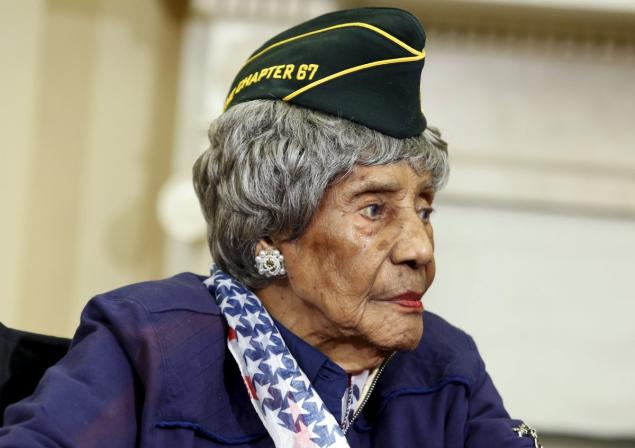
emmaEmma Didlake, the nation’s oldest known veteran, died on Sunday, one month after visiting the White House and meeting with President Barack Obama.

Didlake’s granddaughter told the San Antonio Express-News that the 110-year-old had felt tired over the past few days and showed signs of failing health.

“It was a month ago today that we went to the White House,” said Marilyn Horne. “I think she felt she had accomplished everything and could take her rest.”

At the age of 38, as a mother with five children, Didlake joined the Women’s Army Auxiliary Corps and earned multiple medals for her service. After leaving the military, she became active in the civil rights movement: She joined the Detroit chapter of the NAACP, and marched with Rev. Martin Luther King Jr. in 1963.

“We are so grateful that she is here with us today,” Obama told reporters after his July 17 meeting with Didlake. “And it’s a great reminder of not only the sacrifices that the greatest generation made on our behalf, but also the kind of trailblazing that our women veterans made, African-American veterans who helped to integrate our armed services,” Obama said.

Monday afternoon, the president released a statement about her passing, saying she “served her country with distinction and honor.”

“I was humbled and grateful to welcome Emma to the White House last month,” he said, “and Michelle and I send our deepest condolences to Emma’s family, friends, and everyone she inspired over her long and quintessentially American life.”

Wildest (Pickleball) Dream Come True

Bend,  Oregon

I’ve been  playing pickleball for three years.

When  I  first started playing, I thought I was amazing… 🙂 

Then the  more I played,  the more I realized the less I knew.  And the more I played,  the more I realized that my skills were far less than I thought they were. 🙁

Pickleball players  are ranked by the United States of America Pickleball Association (USAPA) according to ability level.  The ranking goes from one to five. Everyone starts out as a one. Then as you get better,  your number goes up.

Carol and I  entered our first tournament as 3.0’s.  We won every match, and we’re moved by the USAPA up to 3.5’s. And we’ve been stuck there for almost two years.

images (4)My goal was  to become good enough to be  ranked 4.0. I didn’t care if I won at  4.0. I just wanted to be ranked a 4.0.

I surpassed that goal yesterday by actually WINNING a tournament as a 4.0. Here’s a photo of my  good medal!

0816151856

I had to play at the 4.0 level because my wonderful partner,  Joanne,  has a 4 .0 ranking. (Players can play up but not down rankings.) 

0816151412a

I’m on cloud nine!

The accomplishment feels similar  to training for and competing in my first (and only)  marathon.

The journey from  deciding to run one,  training for six months to run one,  and actually running all 26.2 miles in one was life changing.

images (1)

And the nine month journey to become a better pickleball player has been as well, although in a different way because this journey was less solo. I had lots of coaching and help from fantastic people.

download (5)I was so happy I didn’t know whether to laugh or cry…

So I did both!

Lakes, Lakes, and More Lakes

Bend,  Oregon

We took a great drive in the mountains around Bend yesterday morning.

And we were rewarded with a plethora of lakes nestled in among the pine trees.

0814151011

And the heavenly cloud cover made them even more magical.

0814151049

There were boaters galore.

0814151051

And paths through the reeds were the boaters passed through.

0814151048

Near the top of Mount Bachelor,  we  saw a dog sled team preparing to mush.

0814151141

We saw many unique vehicles ready for the first snow fall.

0814151118

Our Jeep was so hap,  hap,  happy to be back in the mountains.

0814151046

And we were hap,  hap,  happy to be in cooler temps! Hard to read,  but that’s 59.4!

0814151124


You Never Know…

Bend,  Oregon

Here is a true story of something that happened this weekend while playing pickleball at a tournament in Bend.

It shows how we never know where our words will land…

************

When I first started playing pickleball at the local YMCA three years ago,  I met a man named Don Zaph.

Don was a character – –  with a joie de vivre that was both inspiring and contagious. 

A former Olympic distance runner for Canada,  Don literally ran at least a hundred miles a week, usually on the Boise Greenbelt.

downloadPickleball was just for fun and a way to meet people.  

Wearing loud Hawaiian  shorts and laughing with every play,  Don made a great partner.

Sadly and very unexpectedly,  just shy of his 70th birthday,  Don died in his sleep from a blood clot.

Here’s the start of Don’t obituary :

 Donald Allen Zaph 1944 ~ 2013 Don Zaph is on his longest run, but this time it won’t be on the Greenbelt. He left this world …

Rhoda,  his ex-wife and forever best friend,  held a memorial service at a park along the Greenbelt and served Don’s two favorite foods: Coca-Cola and Hershey Chocolate Bars.

download

I wasn’t able to attend the service,  so a few weeks afterwards I sent an email to Rhoda,  whom I had never met but felt like I knew because Don talked so lovingly of her. 

I told her how much I loved Don and how much I would miss him.  And I told her a few funny stories about Don.  

download (2)

Fast forward to this weekend…

I had forgotten that  Rhoda lived in Bend  until I heard her name announced for a match at the tournament of nearly 300 players.

I told a Boise friend,  “That must Don’s ex-wife!” My friend had no idea who I was talking about.

A woman walking by quickly turned around and asked,  “Are you talking about me?” 

Turns out the woman was Rhoda,  so we got the opportunity to meet in person and share some wonderful stories about Don. We laughed,  we cried,  and we hugged…

I learned that Don randomly took gifts to hospitalized children and war veterans.  And when he took the gifts,  he stayed and visited for a couple of hours. 

images

One child’s parents heard their child’s first laugh in a year during one of Don’s visits. 

And a veteran loved the huge stuffed dog Don bought to replace the vet’s recently deceased dog.

I miss Don, and I’m so happy that I got to learn more about him from Rhoda based on a chance encounter…