Indio, California
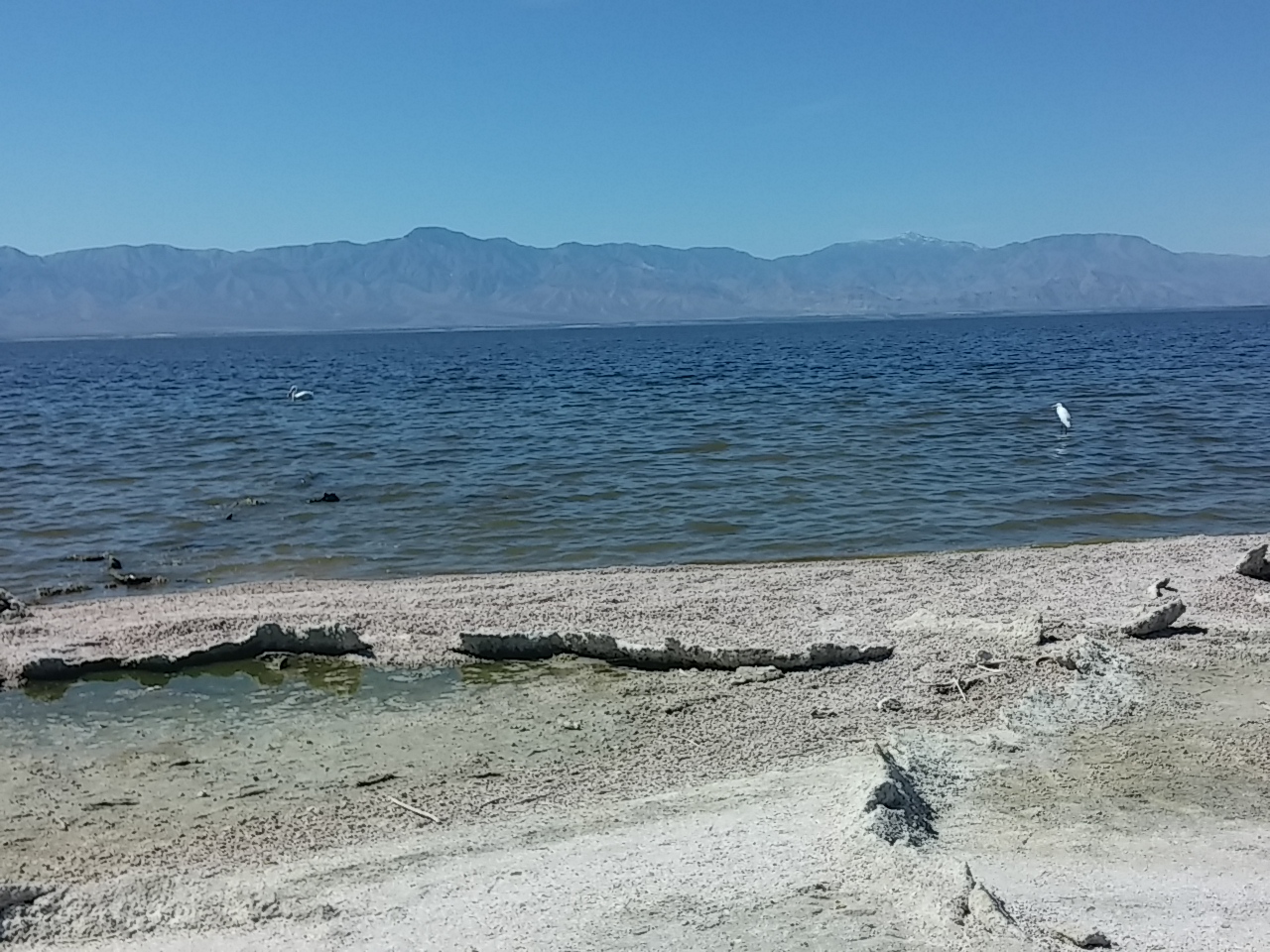
We took a drive to the Salton Sea yesterday. It is a part of a California State Park that is located about 30 miles south of Indio in the middle of scores of date palm tree farms.
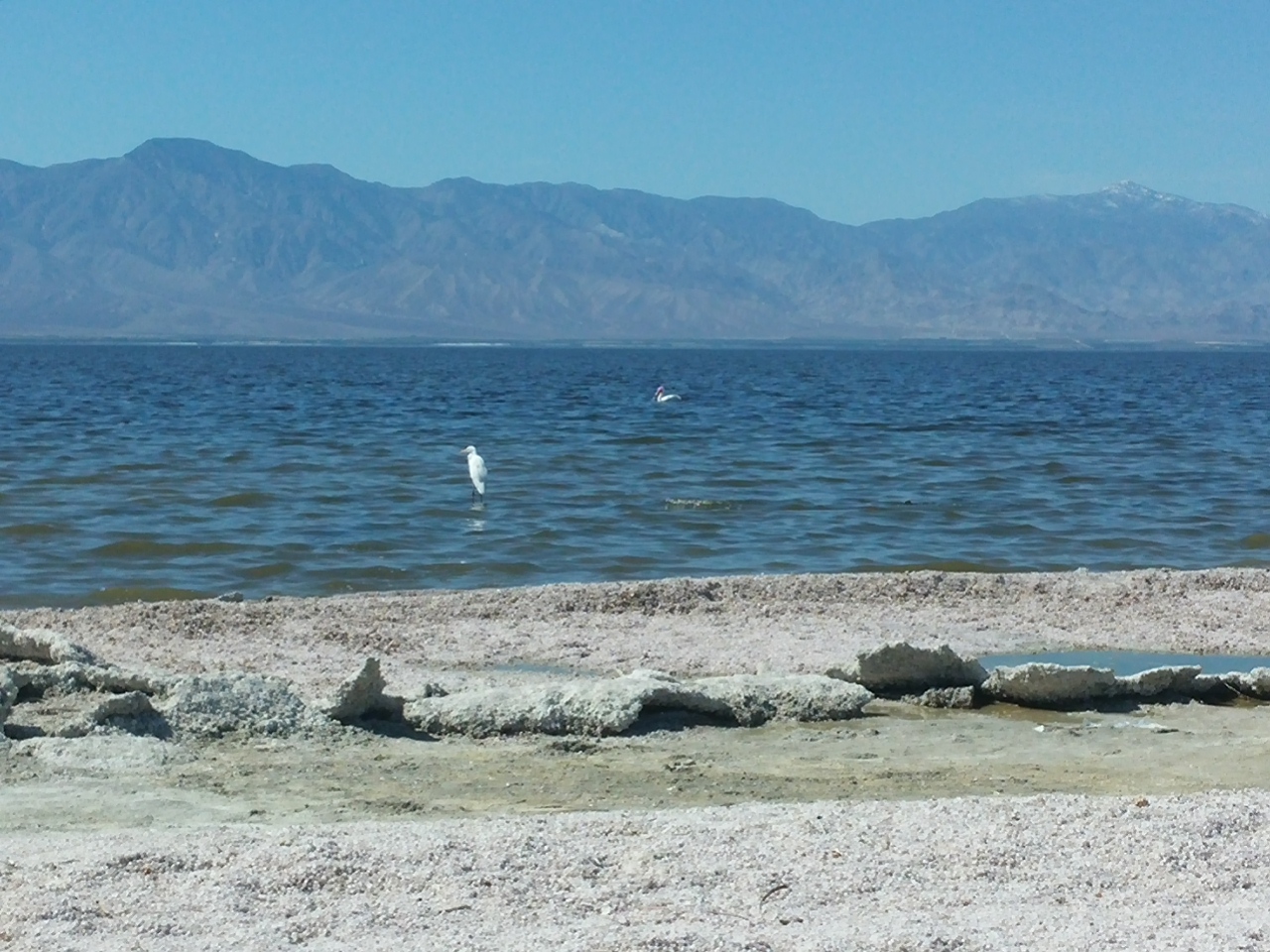
It’s a rather unique place on earth because it’s located at over 200 feet below sea level and it stinks to high heaven. Yet lots of people camp, boat, picnic, and visit there…
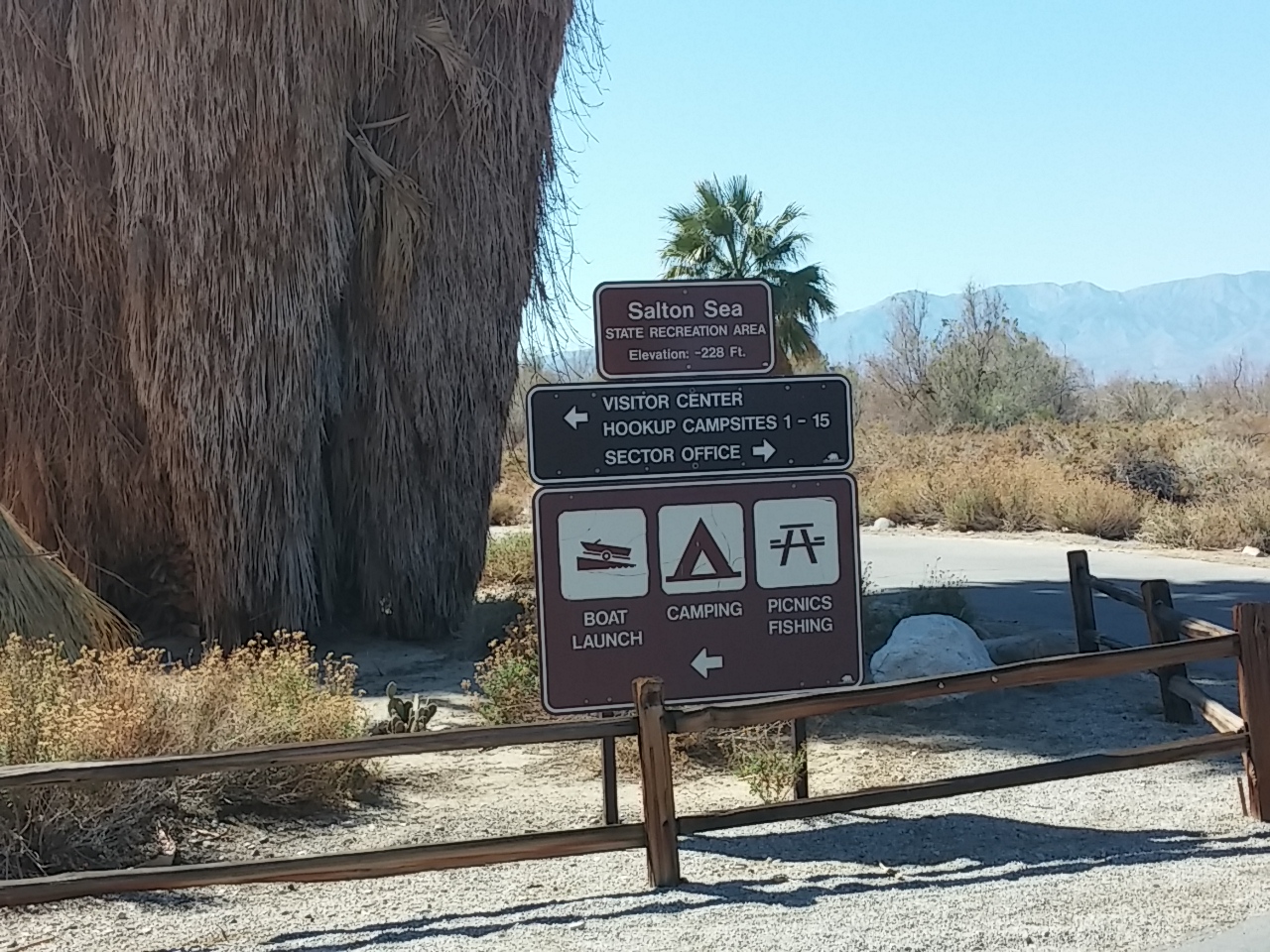
Here are a few fast facts about the Salton Sea from the California Parks Department:
Water and Geographic Facts
- The Salton Sea is California’s largest lake. It is the third largest saline lake in the nation.
- The Sea has no outlet.
- Its surface elevation is 227 feet below sea level.
- The average depth of the Salton Sea is 29.9 feet, its deepest is about 50 feet.
- The Sea’s watershed is 8,000 square miles.
- Annual inflow is 1.3 million acre-feet with an annual salt load of 4 million tons.
- About 1.3 million acre-feet of water evaporates from the Salton Sea each year.
Aviary Facts
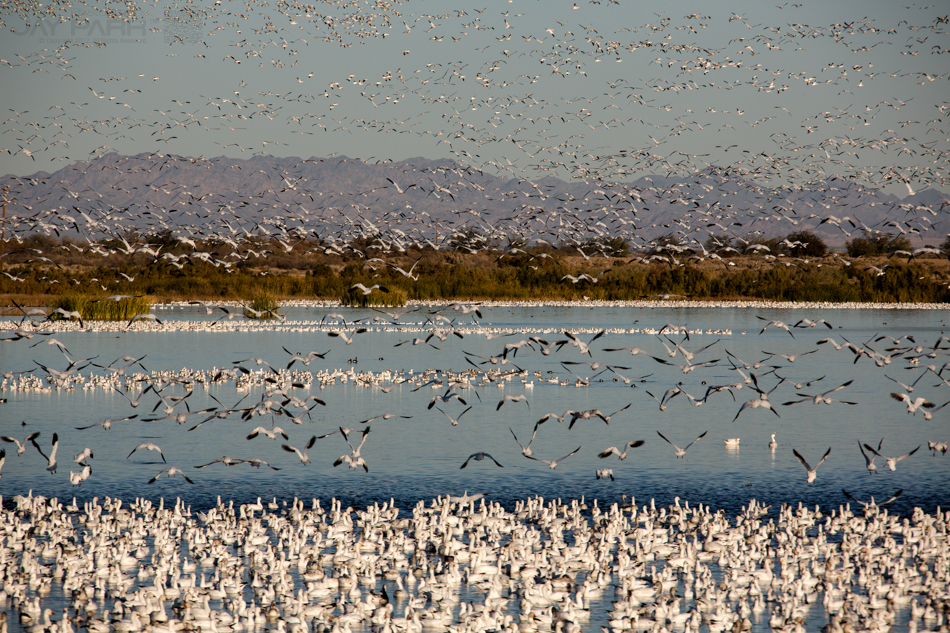
- Located on the Pacific Flyway, about 400 different species of birds have been counted at the Salton Sea–almost half of the 900 species known to exist on the North American Continent.
- During winter migration up to four million individual birds are estimated to use the Sea each day. There is a greater species variety and more individual species here than any other place in the nation.
We saw lots of birds on our visit including a Great White Pelican and several types of herons.
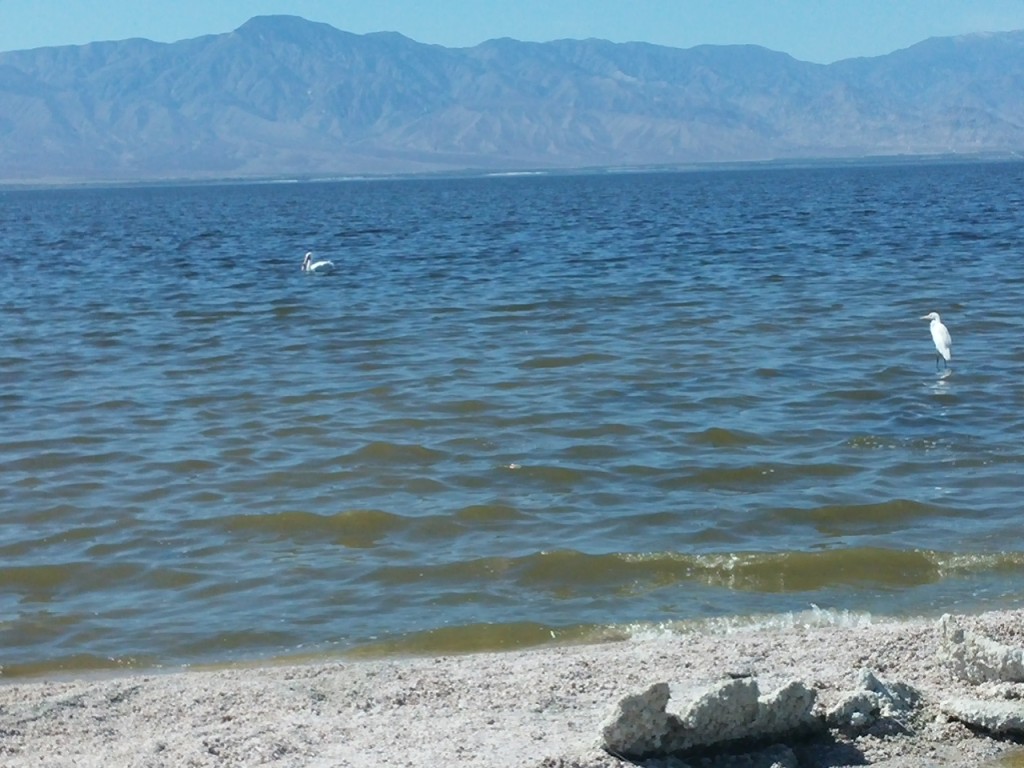 The smell is caused by decaying organic matter and has a rotten-egg odor. In the recent past, massive die offs of talipia have caused an increase of the smell causing odor alerts in areas up to 150 miles away. Droughts cause an increase in the salinity of the water which causes fish to die. According to one article I read almost 8 million fish died on one day in 1999. Luckily, the day we visited the smell wasn’t that bad…
We were expecting the shoreline to be sand, but it was more than 99% full of shells and less than one percent of fish bones.
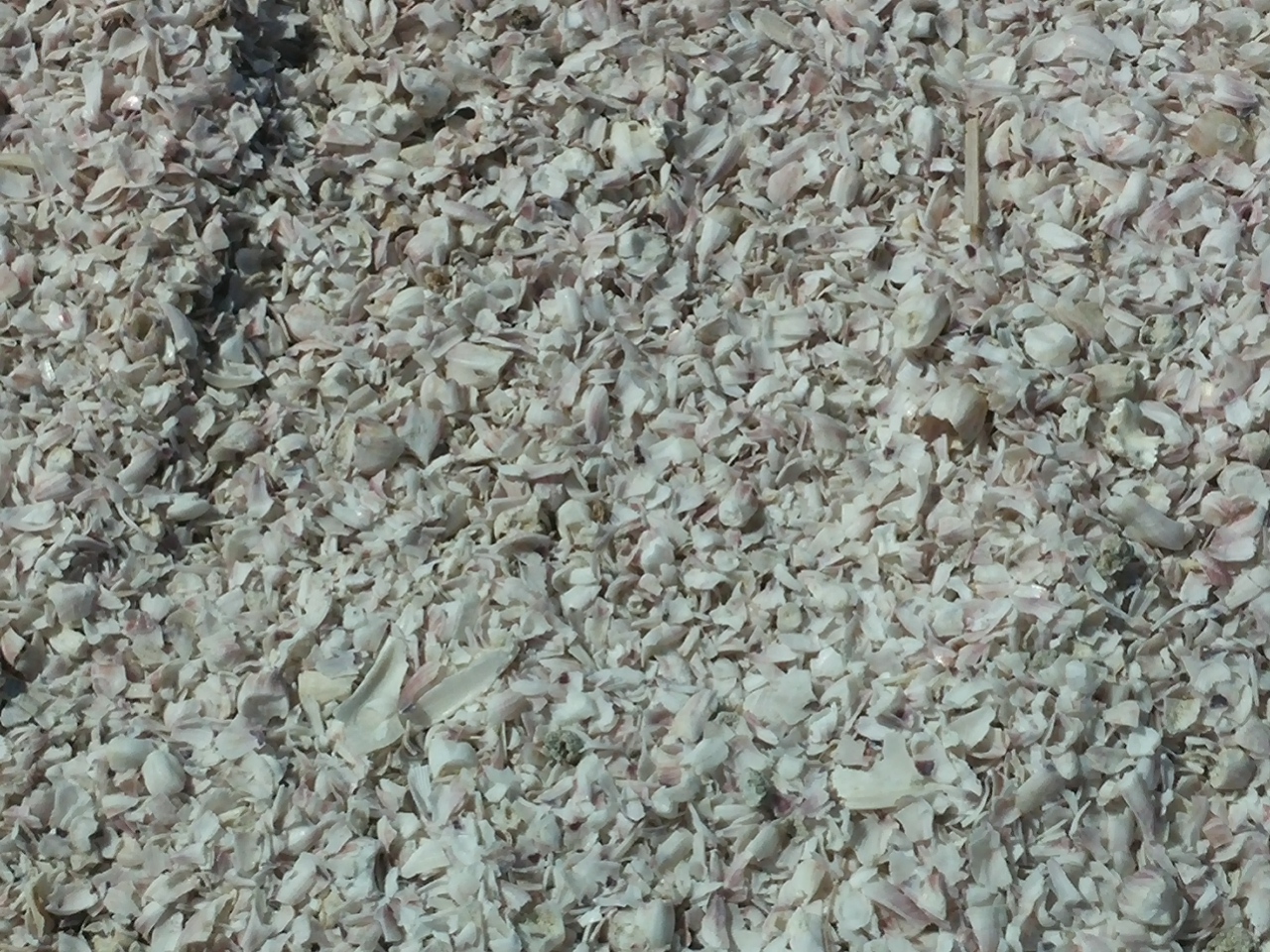
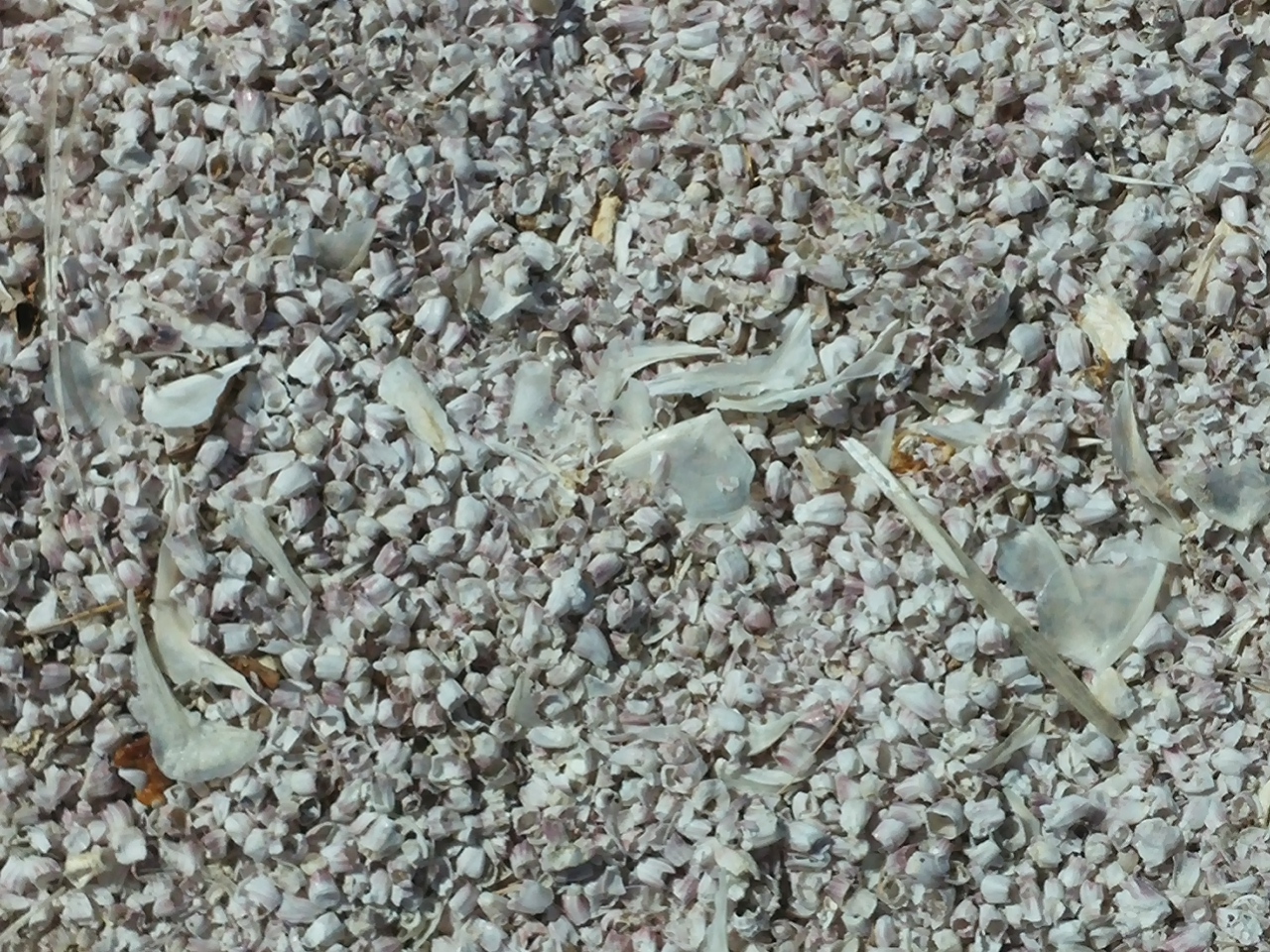 Turns out that the shells are from barnacles. According to a volunteer I talked with “The barnacles arrived at the Salton Sea during World War II because military sea planes would regularly land at the Salton Sea, thus bringing with them. The barnacles ended up flourishing in the Salton Sea environment.” And they die off by the millions…
While the Salton Sea is not the most pleasant place to visit, it is one of the most interesting I’ve been to.
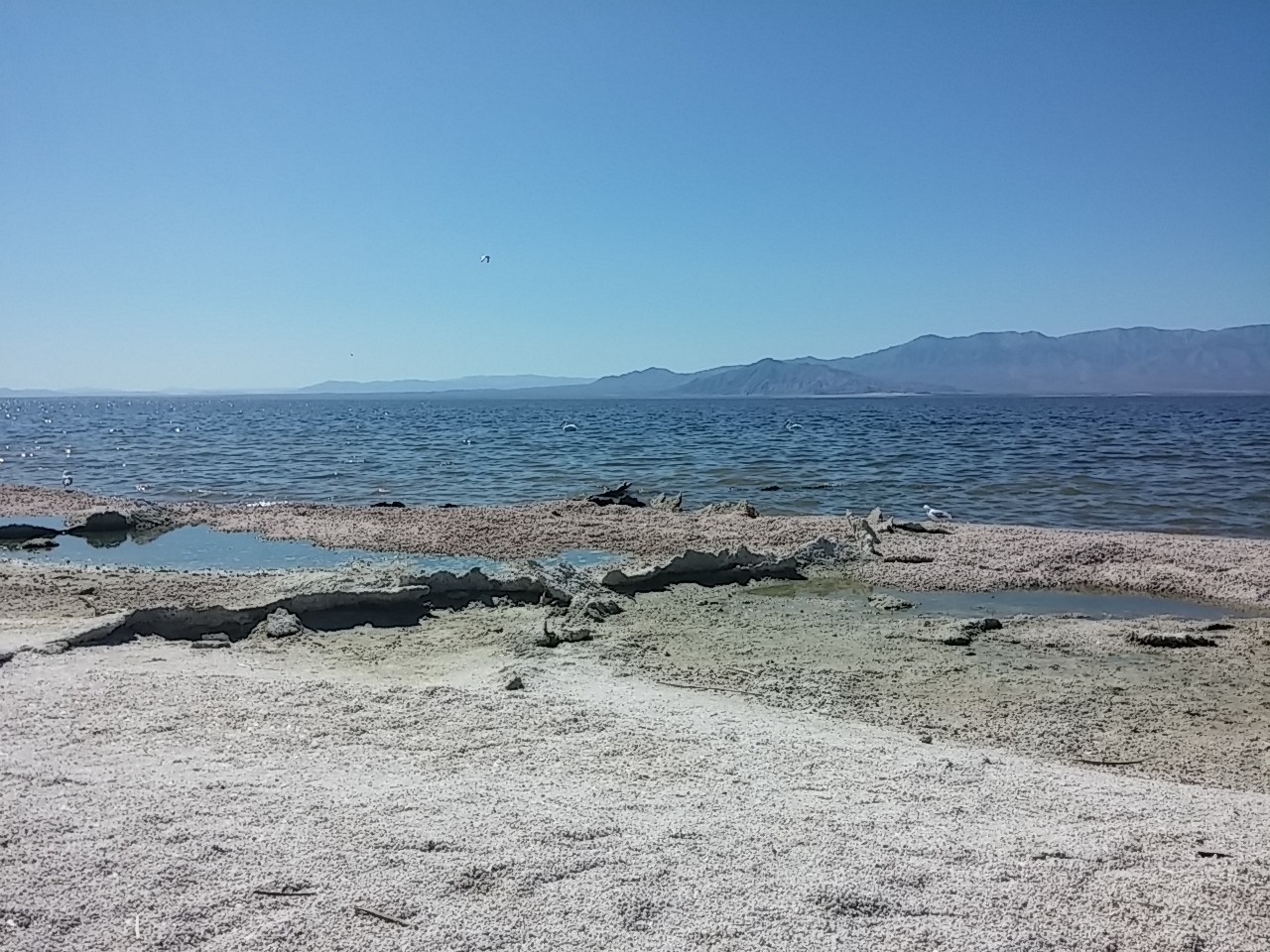 This is not my photo, but you can see why the Salton Sea is a bird watcher’s paradise!