Category Archives: Cerebrations

Organic Schmorganic

I was looking for our favorite croutons yesterday while shopping at Costco.

We love these and have eaten bazillions of them over the last decade…

Garlic croutonsThey are so good and so garlicky that we often eat them like potato chips.

Even the crumbs were delicious. We had the last little bit of crumbs over home grown zucchini for dinner the other night. Yummy!!!

Alas, they aren’t at Costco anymore.

In the move to make us all healthier so that we live even longer and buy more Costco wine, the only crouton choice is now organic.

organic-croutons

Seems like EVERYTHING’s going organic lately.

I’m sure organic is better for people in general, but at my age it just seems silly to spend more money on organic.

At first I thought I was just being cranky and that crankiness was making me spot more organic foods.

But lo and behold, organic is the new gluten-free!

organic-growth

Organic food sales are expected to grow (pun intended 🙂 ) by 14% annually over the next five years. Yes, annually!

And domestic organic food production grew almost 250% from 2002 to 2011. And during that same time period, non-organic food production grew only 3%.

What’s all this mean?

It means I better get used to seeing more organically grown foods when I shop, and I’d better get used to paying more for them…

download

Faith + Hope

Richie recently stopped over in Copenhagen after a quick business trip to Germany.

And, as usual, first thing I did was check his blog to see if he’s posted updates. (gettoyouthcrew.blogspot.com) And he has!

I love the way he writes because it makes me feel like I’m there. And he has a sense of what’s important to focus on that might seem quirky to some, but to me his logic makes perfect sense! 🙂

Anyway, one of the things he commented on and took a picture of intrigued me:

balancing

There was a Catholic church with an art installation with a complicated set of balances and different values and emotions on them.

People signed stones and put them on the balance of their choice. “HOPE” was in a slight lead over “FAITH” for the overall lead (lowest sitting plate).

Made me start wondering, what word would I put a stone on?

Hmmmm….

faith


  • complete trust or confidence in some or something.
  • strong belief in God or in the doctrines of a religion, based on spiritual apprehension rather than proof.

psalm-hope

  •  feeling of expectation and desire for a certain thing to happen.
  • a feeling of trust.

I was pondering which word I would choose:

FAITH is complete trust.

HOPE is feelings of expectation and trust.

As I was pondering about the differences between those two words, I searched for images to use.

I came across this:

fhl


Which made me surprised that “LOVE” wasn’t the most chosen word.

size_big

What’s in a (Wildfire’s) Name?

Ever wonder how wildfires are named?

fire-2I have. Here’s a few of the active fires listed on Inciweb for Idaho right now: Scurvy Mountain Wildfire, Woodrat Fire, Blue Fire.

A while back there was a fire in northern Idaho called the Not Creative Fire.  Really! Here it is on Inciweb.

That’s the most unique name I’ve ever heard of and I wondered how the fire came to get that name.

Thanks to Carol catching a blurb on NPR, here’s an explanation…

From NPR.org

DAVID GREENE, HOST:

Here in this country, we are tracking some major wildfires that are burning across the American West. And we’re also tracking their names. Firefighters give names to the flames they fight, such as Blankenship, Bald Knob, Soda and Scotchmans Gulch.

STEVE INSKEEP, HOST:

A bit unusual, which made us wonder, how do wildfires get their names?

GREENE: We put that question to Betsy Haynes. She’s usually a national park ranger in Virginia. But this summer, she has been spending time helping fight those fires out west.

BETSY HAYNES: Most of the time, they’re named for their origin, for the area they are in.

INSKEEP: You know, like lakes or mountains or roads or towns or counties. Those are all fodder for wildfire names.

HAYNES: Just looking at the situation report for this morning, there’s Chelan Complex for Washington state. There’s one called Tepee Mountain, Youngs Creek. There’s even one named the Horse, the Cougar, the Bobcat right now.

2015_08_29-09.05.33.859-CDT

GREENE: But this summer, there have been so many wildfires, Haynes says officials have had moments where they can’t keep up.

HAYNES: Well, something crazy happened a week or two ago. There was one named the Not Creative.

INSKEEP: The Not Creative fire in southeast (actually northern) Idaho. After being called out to the state’s 57th fire of the season, the responders who were first on the scene just couldn’t come up with a name.

GREENE: At least not a creative name, so they went with Not Creative. Emily Callihan from the Idaho Department of Land told us this was understandable. It was after a long day working on the dozens of fires already burning, and there were no easy landmarks.

HAYNES: Fire managers needed to start an initial attack on the fire. And because the fire needs to have an identifier, a name, they needed to have a name identified so dispatch knew where to send those resources so they could get the fire under control.

INSKEEP: We are happy to report that the Not Creative fire is now completely out. And by the way, that’s actually kind of a creative name in a big way, to say that you’re not feeling creative and call it the Not Creative Fire. Anyway, it’s out. But there are still 76 fires burning in the western United States, such as the Rouge Fire, Mad River Complex, Solitude, Buck Horn, Lawyer Complex and more.

ThankYouFF

Conspiracy Theory

I am convinced there is governmental conspiracy that determines how weather forecasts are presented to the public.

its-a-conspiracy

This conspiracy doesn’t affect forecasts all year.  It happens most in summer and winter.

Take a look at the long range forecast for our city:

weather

Notice how the next five days have highs in the 90s and the following six days have highs in the 80s.

When it’s been as sweltering hot as it has this August, I’m convinced that the government forces weatherpeople to put fictitious highs in for future days so that we all don’t go stark raving mad because it’s really going to be at least 95o for the next 10 to 15 days.

Each time I look at the above forecast I think, “I can make it five days. THEN IT WILL BE COOLER. LOTS COOLER!”

But here’s the deal…

If I wait three or four days and then check the forecast again just to make sure that those 80s are still in there, the forecast will have been changed so that those 80s are STILL at least FIVE days away.

Here’s a random image I found when looking for an image to convey “Cooler Temperatures”.  Look at the highs. Five days of 90s followed by some 80s  for some place in West Virginia over the 4th of July. See it’s not only on the West Coast! It’s nationwide!!!!!

sevenday_64024

Think I’m crazy?

Watch your own forecast during either a cold spell in winter or a hot streak in summer…

You’ll see that I’m right! There is a governmental conspiracy at work!

conspiracy-theory

Our Souls at Night

our soulsI just finished listening to Kent Haruf’s final book, Our Souls at Night.

I had heard of Haruf’s work, but I’d never read any of his books before including Plainsong, his third and most known novel.

Our Souls at Night is a beautiful story of a widow and a widower who begin a wonderful friendship after she asks him to sleep with her at night.

She misses lying in bed at night talking with her husband about the events of the day and listening to him breathe before she falls asleep.

So she asks her neighbor to just come spend the night together to see if it will help her sleep at night.

“I’m talking about getting through the night,” she says. “And lying warm in bed, companionably. Lying down in bed together and you staying the night. The nights are the worst. Don’t you think?”

HARUF-1-obit-master675

He agrees, and he knocks on her back door after dark with his pajamas and a toothbrush in a brown paper sack.

After they talk a bit, she does fall asleep. And after a few nights staying with her, he falls asleep as well.

All of Haruf’s novels take place in the fictional town of Holt, in eastern Colorado. Holt is based on Yuma, Colorado, one of Haruf’s residences in the early 1980s.

The book is gentle, heartwarming, and yet surprisingly honest.

I highly recommend it.

******************

Here’s an article from Wall Street Journal about the book that explains much of the details behind the book and its story. Amazing!

Kent Haruf’s Last Chapter
In ‘Our Souls at Night,’ a novel he finished just days before he died, Kent Haruf explores finding love late in life

By JENNIFER MALONEY
May 14, 2015 1:32 p.m. ET

Kent Haruf knew he was dying, but he felt well enough to attempt one more project. It was May of last year, and Mr. Haruf, the best-selling novelist known for his quiet chronicles of small-town Colorado life, had been diagnosed with an incurable lung disease.

“I have an idea,” he said to his wife, Cathy Haruf. “I’m going to write a book about us.”

He stretched the long tube of his oxygen tank out the back door of their bungalow to his writing shed, and began to type.

Normally, it took him six years or more to write a novel. But in a rush of creative energy, he wrote a chapter a day. Roughly 45 days later, he had finished a draft of his final novel, “Our Souls at Night.”

Mr. Haruf died at home in Salida, Colo., on Nov. 30. He was 71 years old. In the months and even days before he died, the author worked with his wife and his editor, Gary Fisketjon, to finish it. His publisher, Alfred A. Knopf, will release the book on May 28 with a first print run of 35,000.

A short, spare and moving novel about a man and a woman who find love late in life, “Our Souls at Night” is already creating a stir. The novel has been selected by the American Booksellers Association as the No. 1 Indie Next Pick for June. Discussions are under way for a film adaptation, according to Mr. Haruf’s agent, Nancy Stauffer.

“Knowing that there will be no more,” readers may find this book even more powerful than Mr. Haruf’s previous novels, said Cathy Langer, lead buyer at the Tattered Cover Book Store in Denver. “Plainsong,” his most famous book, has sold more than one million copies in the U.S.

khcabin

“Plainsong,” in which two old, cantankerous bachelor farmer brothers take in a pregnant teenager, was the first in a trilogy, all set in the fictional town of Holt, Colo. The new novel is set in the same town, but is separate from the trilogy.

“It has all of those Haruf-like things—the community, the forging of relationships,” Mr. Fisketjon said. “But there is something about this book that seems to me completely different… The simplicity of it, the directness of it. The get-to-it-ness of it. The opening is like, Wow.”

The book begins with a proposition: A 70-year-old widow named Addie Moore knocks on the door of a longtime neighbor and asks if he would like to come to her house at night to lie in bed—not for sex, but to talk and fall asleep together.

“I’m talking about getting through the night,” she says. “And lying warm in bed, companionably. Lying down in bed together and you staying the night. The nights are the worst. Don’t you think?”

“Yes. I think so,” he says.

Alan Kent Haruf was born in 1943 in the steel-mill town of Pueblo, Colo. His father was a Methodist preacher. That summer, his family moved onto the Eastern Plains of Colorado, where they lived in three different towns over the next 12 years. This was the landscape where he would set his novels.

harufHe attended high school in Cañon City, Colo., where, freshman year, he met Cathy Shattuck. They lived on the same street. (Her father was an Episcopal priest.) The two became close friends, playing in the band together and commiserating over girlfriends and boyfriends. They went on double dates together but never dated.

At Nebraska Wesleyan University in Lincoln, Mr. Haruf discovered Faulkner and Hemingway, and decided to become an English teacher. He began to write short stories while volunteering with the Peace Corps in Turkey, and applied to the Iowa Writers’ Workshop. He was rejected. He married in 1967 and continued to write, applying to the workshop again in 1971. This time, he moved his wife and baby daughter to Iowa before the school finally admitted him.

He spent the next 11 years trying to get published. He taught high-school English in Colorado and Wisconsin, and wrote during the summers. “The Tie That Binds,” his first published novel, was released in 1984 when he was 41.

In 1991, he rekindled his friendship with Cathy Shattuck (by then Cathy Dempsey) at their 30th high-school reunion. Both of them were married. She had five children. He had three. She was a special-education teacher in Virginia, working with physically disabled students.

cathyandkentHe began to write “Plainsong” soon after that, modeling one of the characters, a teacher named Maggie Jones, after her.

Within a few years, both of their marriages had ended. Their relationship began long-distance, with long talks on the phone. In 1995, she joined him in Illinois, where he was teaching in the MFA program at Southern Illinois University. They were married that year.

“Plainsong” was published in 1999. It was a runaway best seller, and a finalist for the National Book Award.

“From simple elements, Haruf achieves a novel of wisdom and grace–a narrative that builds in strength and feeling until, as in a choral chant, the voices in the book surround, transport, and lift the reader off the ground,” the National Book Award citation said.

The success of “Plainsong” meant that he could now write full-time. Kent and Cathy Haruf built a cabin in the mountains near Salida, Colo., about 60 miles west of the town where they attended high school. She got a part-time job as a hospice volunteer coordinator, so she could travel with him on book tours.

“They were just so in love,” the author’s sister-in-law Kathy Haruf said. “You could feel it when you were with them.”

In the woods by their cabin, they adapted a tool shed—insulated, with a space heater, desk, typewriter and bookshelf. Every morning at 9, rain, shine or snow, Mr. Haruf would head out there.

He would read a passage from one of his favorite authors—Hemingway, Faulkner or Chekhov—“just to remind myself of what a sentence can be,” he said in an interview with John Moore, a journalist with the Denver Center for the Performing Arts, last November. Then he would roll an old, yellowed sheet of paper into his Royal typewriter, pull a stocking cap down over his eyes, and type blind, his head sinking toward the keys. He would write one scene, with no punctuation or paragraph breaks, filling a page with single-spaced text.

He wouldn’t allow himself to get up until he had finished the scene.

When he was diagnosed with interstitial lung disease in February 2014, he felt “sick and very downhearted spiritually and mentally,” Mr. Haruf said in the same interview, six days before he died. “And then in April, I began to feel a little better, and I thought, ‘Well, I don’t want to just sit around waiting.’”

After he was diagnosed with an incurable lung disease, author Kent Haruf and his wife Cathy formed a two-person book club of sorts.

Mr. Haruf described it, in an interview with the Denver Performing Arts Center, as “a seminar course in spiritual thought about death and dying.” The two of them, each morning, read and discussed dozens of books about death and spirituality.

In “Our Souls at Night,” Mr. Haruf’s final novel, Addie asks Louis: “Aren’t you afraid of death?”

“Not like I was,” he replies. “I’ve come to believe in some kind of afterlife. A return to our true selves, a spirit self. We’re just in this physical body till we go back to spirit.”

Below, some of the books the Harufs read together:

“On Death and Dying,” by Elisabeth KĂŒbler-Ross
“Dying To Be Me,” by Anita Moorjani
“Wishes Fulfilled,” by Wayne Dyer
“Many Lives, Many Masters,” by Brian L. Weiss
“Ask and It Is Given,” by Esther and Jerry Hicks
“On Life after Death,” by Elisabeth KĂŒbler-Ross
“Messages From the Masters,” by Brian Weiss
“Only Love Is Real,” by Brian Weiss
“Sacred Contracts,” by Caroline Myss

He tried to write some short stories, but didn’t get anywhere, and then the idea came to him for a novel.

“In some ways it felt as if that was what was keeping me alive,” he said. “It was something significant for me to get up for every day.”

He asked his wife not to tell anyone he was writing a book. He wanted it to be surprise.

He started on May 1. By mid-June, he had finished the first draft. He revised and retyped it, and one afternoon in early August, Cathy Haruf said, “Well, are you ready for me to read it?”

“Yes, I think so,” he said.

She retrieved the manuscript from the shed, sat down and read it all at once.

It was not a literal retelling of their marriage. But there they were, recast as Addie Moore and Louis Waters. When she read Addie’s fearless proposition, she thought, “Oh yeah, he knows that I would be the kind to do something like that,” said Ms. Haruf, 71.

The Harufs’ favorite time together was lying in bed at night, talking.

“It’s our love story,” she said. “We would lie there and hold hands and talk. There wasn’t anything we never discussed.”

In the novel, Addie and Louis slowly reveal themselves, and their life stories, as they lie in bed talking. Their connection deepens when Addie’s grandson Jamie comes to stay with her, and it’s tested when neighbors and loved ones voice objections to the relationship.

Woven through the book are details from Mr. Haruf’s life, including subtle nods to his children.

“There we are in these pages,” his daughter Sorel Haruf said. “It’s a final blessing to all of us.”

Cathy Haruf typed the draft on their computer, and updated it as her husband made revisions. She sat next to him in bed, with a pad and pen, making a timeline of the characters, to make sure the fictional dates lined up. They brainstormed titles together. (They rejected: “Till We Meet Again,” “Night Time,” and “Cedar Street.”) And they debated the ending. Ms. Haruf objected to the ending of his first draft, which she argued was out of character for Addie.

“Addie would not do this!” she said.

He rewrote it.

On Sept. 22, he emailed the manuscript to Mr. Fisketjon.

“Here’s a little surprise for you,” he wrote.

“I said, ‘What the f—!’” Mr. Fisketjon recalled. “Shock and awe.”

Mr. Haruf’s doctors hadn’t told him how long he might live. Mr. Fisketjon, knowing that they may not have much time, dropped everything to edit it. Knopf art director Carol Devine Carson, who designed the jackets for the “Plainsong” trilogy, took up the project right away. The trilogy’s covers had all depicted landscapes. For this, she proposed a more intimate image: the silhouette of a wooden headboard against a wall. Mr. Haruf loved it.

The book went through a round of editing. Then it went to a copy editor. Knopf express-mailed a copy-edited manuscript to the Harufs on Nov. 25.

Mr. Haruf was very weak. He told his wife she would have to give it the final read.

On the night of Nov. 29, Kent and Cathy Haruf lay in bed—she in their queen bed and he in a hospital bed alongside it. They held hands, talking quietly, then fell asleep.

When she woke in the morning, he was gone.

haruf-drawing

Wildest (Pickleball) Dream Come True

Bend,  Oregon

I’ve been  playing pickleball for three years.

When  I  first started playing, I thought I was amazing… 🙂 

Then the  more I played,  the more I realized the less I knew.  And the more I played,  the more I realized that my skills were far less than I thought they were. 🙁

Pickleball players  are ranked by the United States of America Pickleball Association (USAPA) according to ability level.  The ranking goes from one to five. Everyone starts out as a one. Then as you get better,  your number goes up.

Carol and I  entered our first tournament as 3.0’s.  We won every match, and we’re moved by the USAPA up to 3.5’s. And we’ve been stuck there for almost two years.

images (4)My goal was  to become good enough to be  ranked 4.0. I didn’t care if I won at  4.0. I just wanted to be ranked a 4.0.

I surpassed that goal yesterday by actually WINNING a tournament as a 4.0. Here’s a photo of my  good medal!

0816151856

I had to play at the 4.0 level because my wonderful partner,  Joanne,  has a 4 .0 ranking. (Players can play up but not down rankings.) 

0816151412a

I’m on cloud nine!

The accomplishment feels similar  to training for and competing in my first (and only)  marathon.

The journey from  deciding to run one,  training for six months to run one,  and actually running all 26.2 miles in one was life changing.

images (1)

And the nine month journey to become a better pickleball player has been as well, although in a different way because this journey was less solo. I had lots of coaching and help from fantastic people.

download (5)I was so happy I didn’t know whether to laugh or cry…

So I did both!

I Want to Die Like a Doctor…

Bear with me, dear Gentle Blog Reader, because this is a long post.

I came across an article entitled “How Doctors Want to Die is Different than Most People” on CNN.com yesterday. The article is quite good and worth a read. You can read it by clicking on the link…

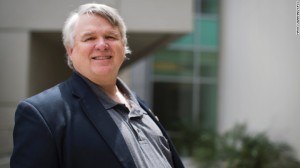
ken-murrayWhat intrigued me the most was the essay that inspired the article; it was written four years ago by Ken Murray, an MD and a Clinical Assistant Professor of Family Medicine at USC.


Below is the essay in its entirety from Zocalo Public Square.

How Doctors Die. It’s Not Like the Rest of Us, But It Should Be.

Years ago, Charlie, a highly respected orthopedist and a mentor of mine, found a lump in his stomach. He had a surgeon explore the area, and the diagnosis was pancreatic cancer. This surgeon was one of the best in the country. He had even invented a new procedure for this exact cancer that could triple a patient’s five-year-survival odds–from 5 percent to 15 percent–albeit with a poor quality of life. Charlie was uninterested. He went home the next day, closed his practice, and never set foot in a hospital again. He focused on spending time with family and feeling as good as possible. Several months later, he died at home. He got no chemotherapy, radiation, or surgical treatment. Medicare didn’t spend much on him.

It’s not a frequent topic of discussion, but doctors die, too. And they don’t die like the rest of us. What’s unusual about them is not how much treatment they get compared to most Americans, but how little. For all the time they spend fending off the deaths of others, they tend to be fairly serene when faced with death themselves. They know exactly what is going to happen, they know the choices, and they generally have access to any sort of medical care they could want. But they go gently.

Of course, doctors don’t want to die; they want to live. But they know enough about modern medicine to know its limits. And they know enough about death to know what all people fear most: dying in pain, and dying alone. They’ve talked about this with their families. They want to be sure, when the time comes, that no heroic measures will happen–that they will never experience, during their last moments on earth, someone breaking their ribs in an attempt to resuscitate them with CPR (that’s what happens if CPR is done right).

Almost all medical professionals have seen what we call “futile care” being performed on people. That’s when doctors bring the cutting edge of technology to bear on a grievously ill person near the end of life. The patient will get cut open, perforated with tubes, hooked up to machines, and assaulted with drugs. All of this occurs in the Intensive Care Unit at a cost of tens of thousands of dollars a day. What it buys is misery we would not inflict on a terrorist. I cannot count the number of times fellow physicians have told me, in words that vary only slightly, “Promise me if you find me like this that you’ll kill me.” They mean it. Some medical personnel wear medallions stamped “NO CODE” to tell physicians not to perform CPR on them. I have even seen it as a tattoo.

To administer medical care that makes people suffer is anguishing. Physicians are trained to gather information without revealing any of their own feelings, but in private, among fellow doctors, they’ll vent. “How can anyone do that to their family members?” they’ll ask. I suspect it’s one reason physicians have higher rates of alcohol abuse and depression than professionals in most other fields. I know it’s one reason I stopped participating in hospital care for the last 10 years of my practice.

How has it come to this–that doctors administer so much care that they wouldn’t want for themselves? The simple, or not-so-simple, answer is this: patients, doctors, and the system.

To see how patients play a role, imagine a scenario in which someone has lost consciousness and been admitted to an emergency room. As is so often the case, no one has made a plan for this situation, and shocked and scared family members find themselves caught up in a maze of choices. They’re overwhelmed. When doctors ask if they want “everything” done, they answer yes. Then the nightmare begins. Sometimes, a family really means “do everything,” but often they just mean “do everything that’s reasonable.” The problem is that they may not know what’s reasonable, nor, in their confusion and sorrow, will they ask about it or hear what a physician may be telling them. For their part, doctors told to do “everything” will do it, whether it is reasonable or not.

The above scenario is a common one. Feeding into the problem are unrealistic expectations of what doctors can accomplish. Many people think of CPR as a reliable lifesaver when, in fact, the results are usually poor. I’ve had hundreds of people brought to me in the emergency room after getting CPR. Exactly one, a healthy man who’d had no heart troubles (for those who want specifics, he had a “tension pneumothorax”), walked out of the hospital. If a patient suffers from severe illness, old age, or a terminal disease, the odds of a good outcome from CPR are infinitesimal, while the odds of suffering are overwhelming. Poor knowledge and misguided expectations lead to a lot of bad decisions.

But of course it’s not just patients making these things happen. Doctors play an enabling role, too. The trouble is that even doctors who hate to administer futile care must find a way to address the wishes of patients and families. Imagine, once again, the emergency room with those grieving, possibly hysterical, family members. They do not know the doctor. Establishing trust and confidence under such circumstances is a very delicate thing. People are prepared to think the doctor is acting out of base motives, trying to save time, or money, or effort, especially if the doctor is advising against further treatment.

Some doctors are stronger communicators than others, and some doctors are more adamant, but the pressures they all face are similar. When I faced circumstances involving end-of-life choices, I adopted the approach of laying out only the options that I thought were reasonable (as I would in any situation) as early in the process as possible. When patients or families brought up unreasonable choices, I would discuss the issue in layman’s terms that portrayed the downsides clearly. If patients or families still insisted on treatments I considered pointless or harmful, I would offer to transfer their care to another doctor or hospital.

Should I have been more forceful at times? I know that some of those transfers still haunt me. One of the patients of whom I was most fond was an attorney from a famous political family. She had severe diabetes and terrible circulation, and, at one point, she developed a painful sore on her foot. Knowing the hazards of hospitals, I did everything I could to keep her from resorting to surgery. Still, she sought out outside experts with whom I had no relationship. Not knowing as much about her as I did, they decided to perform bypass surgery on her chronically clogged blood vessels in both legs. This didn’t restore her circulation, and the surgical wounds wouldn’t heal. Her feet became gangrenous, and she endured bilateral leg amputations. Two weeks later, in the famous medical center in which all this had occurred, she died.

It’s easy to find fault with both doctors and patients in such stories, but in many ways all the parties are simply victims of a larger system that encourages excessive treatment. In some unfortunate cases, doctors use the fee-for-service model to do everything they can, no matter how pointless, to make money. More commonly, though, doctors are fearful of litigation and do whatever they’re asked, with little feedback, to avoid getting in trouble.

Even when the right preparations have been made, the system can still swallow people up. One of my patients was a man named Jack, a 78-year-old who had been ill for years and undergone about 15 major surgical procedures. He explained to me that he never, under any circumstances, wanted to be placed on life support machines again. One Saturday, however, Jack suffered a massive stroke and got admitted to the emergency room unconscious, without his wife. Doctors did everything possible to resuscitate him and put him on life support in the ICU. This was Jack’s worst nightmare. When I arrived at the hospital and took over Jack’s care, I spoke to his wife and to hospital staff, bringing in my office notes with his care preferences. Then I turned off the life support machines and sat with him. He died two hours later.

Even with all his wishes documented, Jack hadn’t died as he’d hoped. The system had intervened. One of the nurses, I later found out, even reported my unplugging of Jack to the authorities as a possible homicide. Nothing came of it, of course; Jack’s wishes had been spelled out explicitly, and he’d left the paperwork to prove it. But the prospect of a police investigation is terrifying for any physician. I could far more easily have left Jack on life support against his stated wishes, prolonging his life, and his suffering, a few more weeks. I would even have made a little more money, and Medicare would have ended up with an additional $500,000 bill. It’s no wonder many doctors err on the side of overtreatment.

But doctors still don’t over-treat themselves. They see the consequences of this constantly. Almost anyone can find a way to die in peace at home, and pain can be managed better than ever. Hospice care, which focuses on providing terminally ill patients with comfort and dignity rather than on futile cures, provides most people with much better final days. Amazingly, studies have found that people placed in hospice care often live longer than people with the same disease who are seeking active cures. I was struck to hear on the radio recently that the famous reporter Tom Wicker had “died peacefully at home, surrounded by his family.” Such stories are, thankfully, increasingly common.

Several years ago, my older cousin Torch (born at home by the light of a flashlight–or torch) had a seizure that turned out to be the result of lung cancer that had gone to his brain. I arranged for him to see various specialists, and we learned that with aggressive treatment of his condition, including three to five hospital visits a week for chemotherapy, he would live perhaps four months. Ultimately, Torch decided against any treatment and simply took pills for brain swelling. He moved in with me.

We spent the next eight months doing a bunch of things that he enjoyed, having fun together like we hadn’t had in decades. We went to Disneyland, his first time. We’d hang out at home. Torch was a sports nut, and he was very happy to watch sports and eat my cooking. He even gained a bit of weight, eating his favorite foods rather than hospital foods. He had no serious pain, and he remained high-spirited. One day, he didn’t wake up. He spent the next three days in a coma-like sleep and then died. The cost of his medical care for those eight months, for the one drug he was taking, was about $20.

Torch was no doctor, but he knew he wanted a life of quality, not just quantity. Don’t most of us? If there is a state of the art of end-of-life care, it is this: death with dignity. As for me, my physician has my choices. They were easy to make, as they are for most physicians. There will be no heroics, and I will go gentle into that good night. Like my mentor Charlie. Like my cousin Torch. Like my fellow doctors.

Ken Murray, MD, is Clinical Assistant Professor of Family Medicine at USC.

Epic Kindness

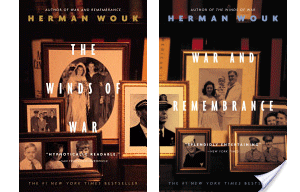
I’m in the process of reading Herman Wouk’s  epic two-volume novel of World War II — The Winds of War (1971) and War and Remembrance (1978).

hw

The books are amazingly detailed and full of history about World War II. At nearly 1000 pages each, I feel like I’ve been in a history class the entire time I’ve been reading them.

Absolutely fascinating. And I’m anxious to learn more about that time period…

On last night’s news, there was an amazing story about the discovery of a cereal box in a house in Tennessee that shows the goodness of people, from both America and Germany, during World War II.

Hundreds of letters stuffed inside the old cereal box recall the experiences of some of the tens of thousands of POWs who were sent to Tennessee during World War II. The letters show epic kindness and love of humanity during an extraordinary situation.

Yours, Mines, + Ours

Took me a while to figure out that Rich and I are transitioning back into the lives we had before traveling and living in Homer.

We each had, in essence, three lives to worry about: Your life, My life, and Our life.

Hopefully this will help make more sense of it all…

I was living my life, I had some space, both mentally and physically to do my own things.  I could go work on my crafts in “Kathy’s shop”. I could go lay on the hammock and take a nap with Sophie while listening to my music. And so on…

Rich was living his life. He had his shop to go work in. He could go work in the yard, tending the trees. And so on…

And we had our lives together. We went for drives in the mountains. We went for hikes. We discussed future plans. And so on…

YMO

Then we bought a motor home and lived in it for about a year.

Homer has about 250 square feet. There is door to the bathroom, and there is a door to close off the bedroom but I think we only had it closed twice.

We traveled, slept, and lived in that 250 square feet. We only had OUR life. There wasn’t room for Your life and there wasn’t room for My life.

MYO

It took a while to adjust to that, but we really got quite good at it.

That’s why I had no idea that adjusting back into Yours, Mine, and Our lives would be the transition it has been.

It hasn’t been as hard a transition as the one into OUR life, but I sure do wish I would have figured out earlier that there would be a transition.

Now that I have, I should have smooth sailing back into Yours, Mine, and Our lives.

Sick of Summer

Meridian, Idaho

I was sitting at the airport in the cell phone waiting lot and googled ‘sick of summer’. It was nearly 9 p.m. and the temperature was still well over 90o.

I thought I’d find a fun picture to post on Facebook to see who else is sick of summer.

Instead I came across this blog posting. Within a few short minutes I was laughing out loud because the author exquisitely wrote what those of us who are sick of summer feel exactly like in early August…

I’m Sick Of Summer

Stephanie Georgopulos

I’m tired of shaving and swimsuits and sunscreen, sick of days so long they stretch out for miles. I’m sick of looking at my shadow and thinking about my body and I’m tired of you looking at it. I’m tired of the dresses and how they cling to my torso like wet newspaper or blow in the hot thick wind, revealing all my secrets. I’m bored with showing my toes, bored with giving everything away.

WomensLongSleeveScoopNeckI’m sick of watching the shirts with sleeves hang lonesome in my closet, I want to put them on and let you take them off. I want to wear the kinds of things that don’t slip off in an instant, the kinds of things with zippers and buttons and layers and depth. I want to feel soft, I want the comfort of a comforter, I want to spend Saturdays in bed with all the windows open.

I want to spend Sundays in cars with the windows open, too, driving to fields where apples and pumpkins grow. I want to taste the thick of fall in my mouth, in pies and brews and hot coffee. I want confusion over whether or not to wear a jacket and confusion over what hue that tree was three weeks ago, I want everything to change so that I can feel like there’s reason to be alert, like there’s a reason to wake up again.

I-Hate-SummerBecause I’m sick of waking up and going to work and being reminded that summer is just summer and not ~!SUMMER!~. I want the feeling of going Back To Something, the feeling that something has moved or morphed even if it’s just the pigment of the leaves or the size of my jeans. I’m sick of the stifling summer, its constant heat and relentless greens. All I want is fall, so I can pretend a drop in temperature and a shift in color means things will be different from here on out.

View original post!